Home Donate New Search Gallery Reviews How-To Books Links Workshops About Contact
Nikon 35-105mm f/3.5-4.5
AF-D ZOOM-NIKKOR (1994-2001)
Sample Images Intro Specs Performance Compared Recommendations

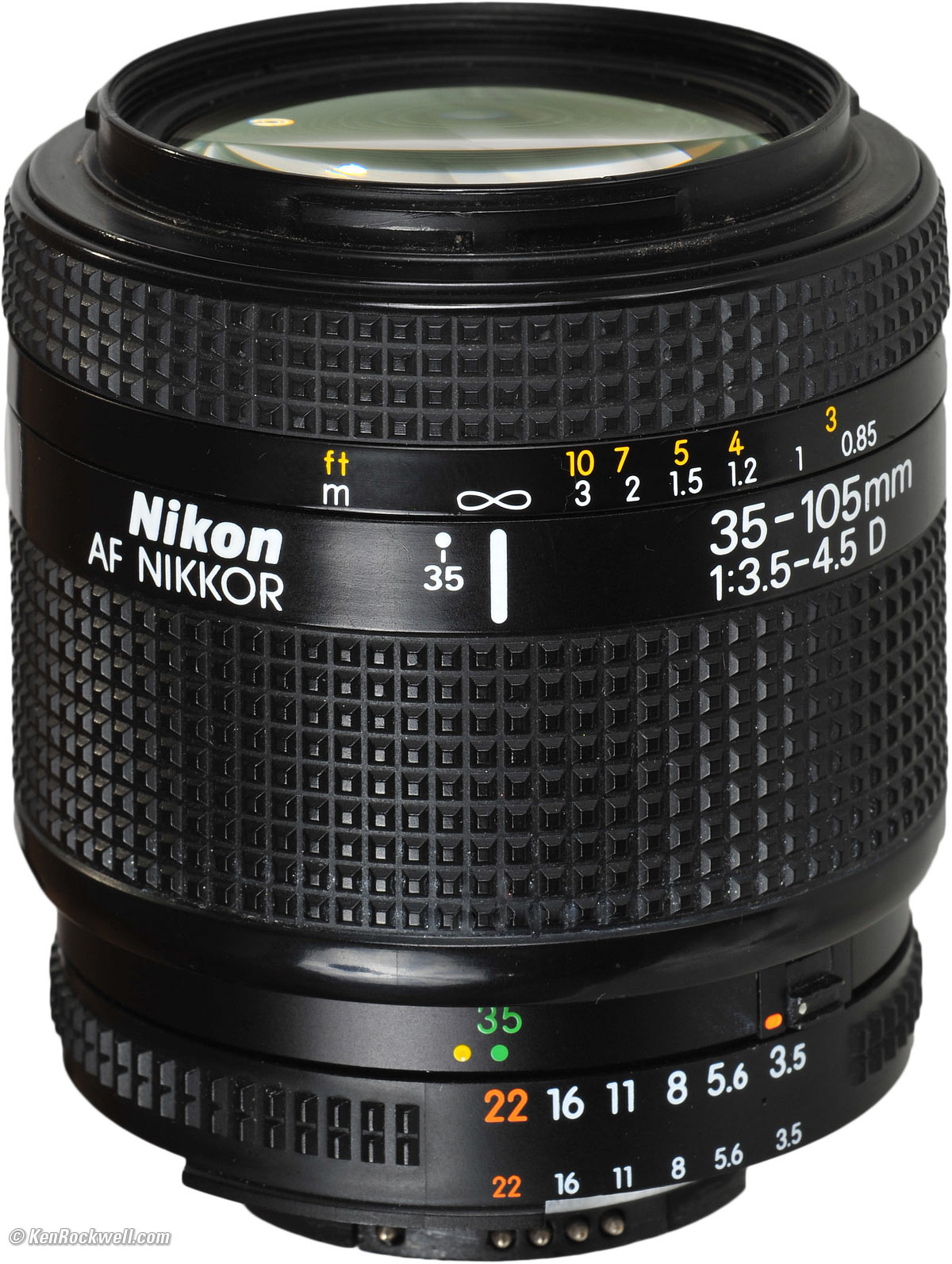
Nikon 35-105mm f/3.5-4.5 AF-D set to 35mm (52mm filters, 14.6 oz./413g, 2.8'/0.85m close focus, about $75 used.) enlarge. This free website's biggest source of support is when you use these links, especially this link directly to this lens at eBay (see How to Win at eBay), when you get anything, regardless of the country in which you live. Thanks! Ken.
August 2016 Nikon Lens Reviews Nikon Reviews All Reviews
| Optics: |  |
| Mechanics: | |
| Ergonomics: |  |
| Usefulness: |  |
| Availability: | |
| Overall: | |
| Price: |
Ideal Uses: Perfect for use on FX digital and 35mm.
Not for: I wouldn't bother with this on a DX camera. I'd use any DX lens, like the 18-55mm kit lens, instead. This lens won't autofocus with the cheapest D40, D40x, D60, D3000, D3100, D5000, D5100 or similar cameras.
Sample Image Files top
Sample Images Intro Specs Performance Compared Recommendations

Color, 05 April 2015. Nikon D7200, Nikon 35-105 AF-D at 75mm, f/6.3 at 1/640 at Auto ISO 100, Perfectly Clear V2. © camera-original file.

Cheesecake, 29 July 2016. 2016 Nikon D5, 1996 Nikon 35-105mm AF-D at 75mm, f/8 at 1/250 at Auto ISO 100. bigger or camera-original file to explore on your computer.

Ralph's at dusk, 8:12PM, 26 July 2016. 2016 Nikon D5, 1996 Nikon 35-105mm AF-D at 35mm, f/3.5 at 1/40 at Auto ISO 1,100. bigger or much bigger to explore on your computer.
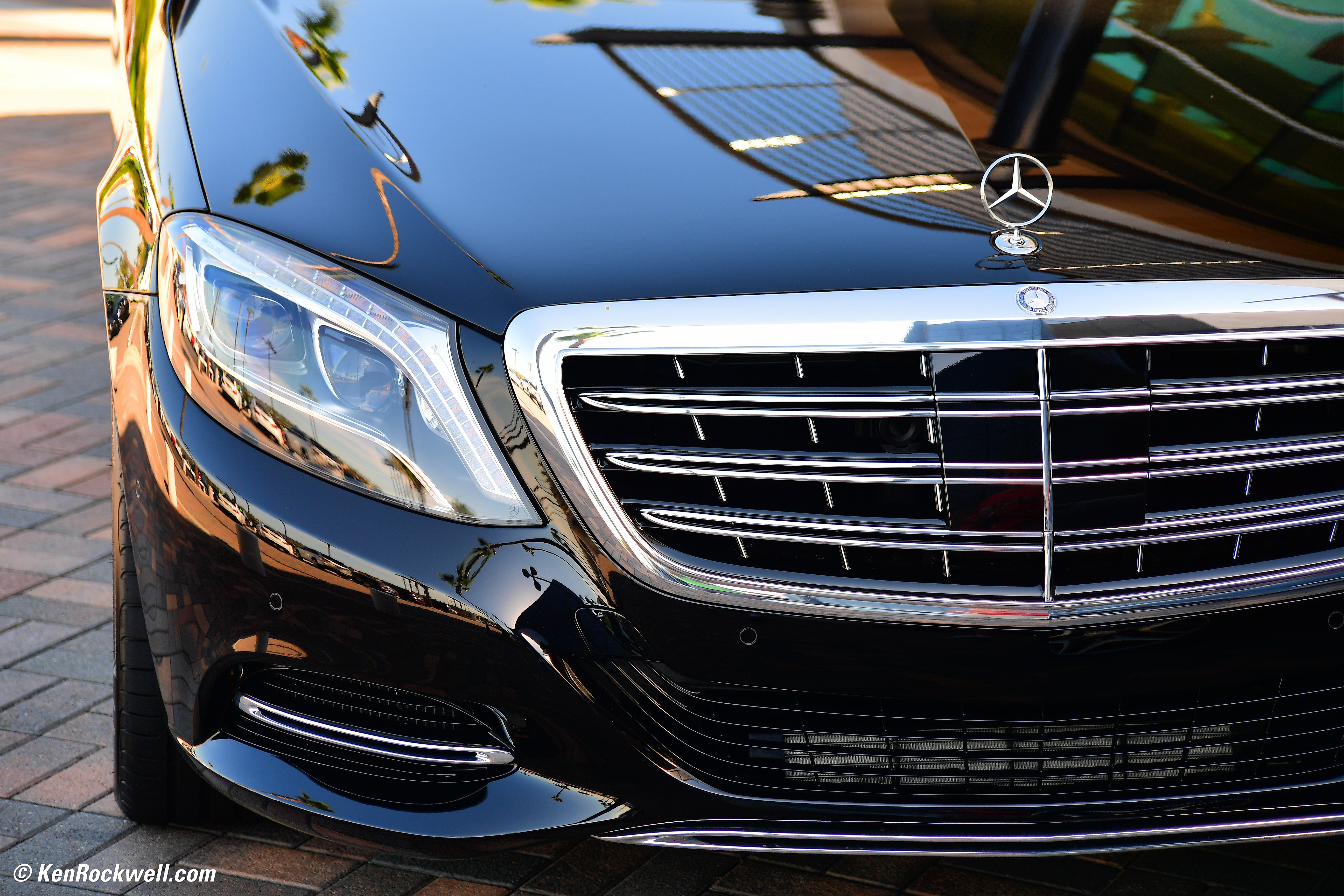
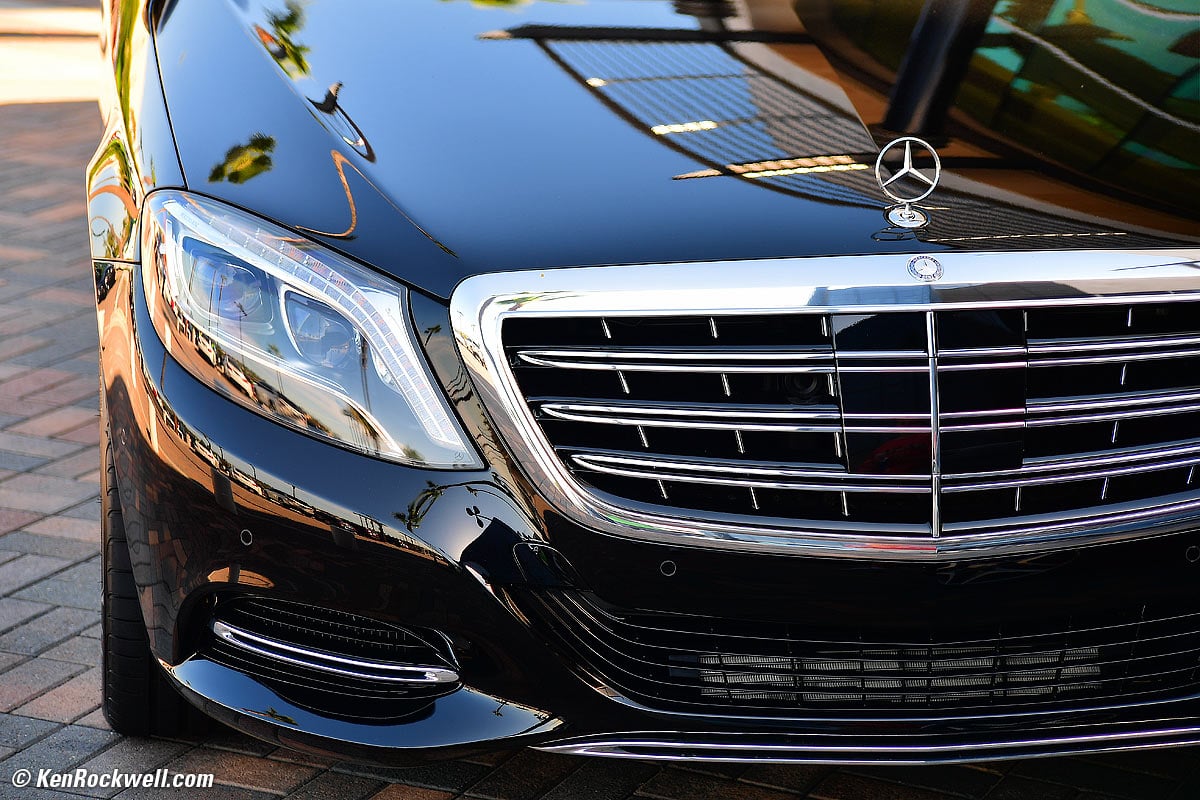
2016 Mercedes S550, 27 July 2016. 2016 Nikon D5, 1996 Nikon 35-105mm AF-D at 105mm, f/4.5 at 1/125 at Auto ISO 110. bigger or full-resolution file to explore on your computer.
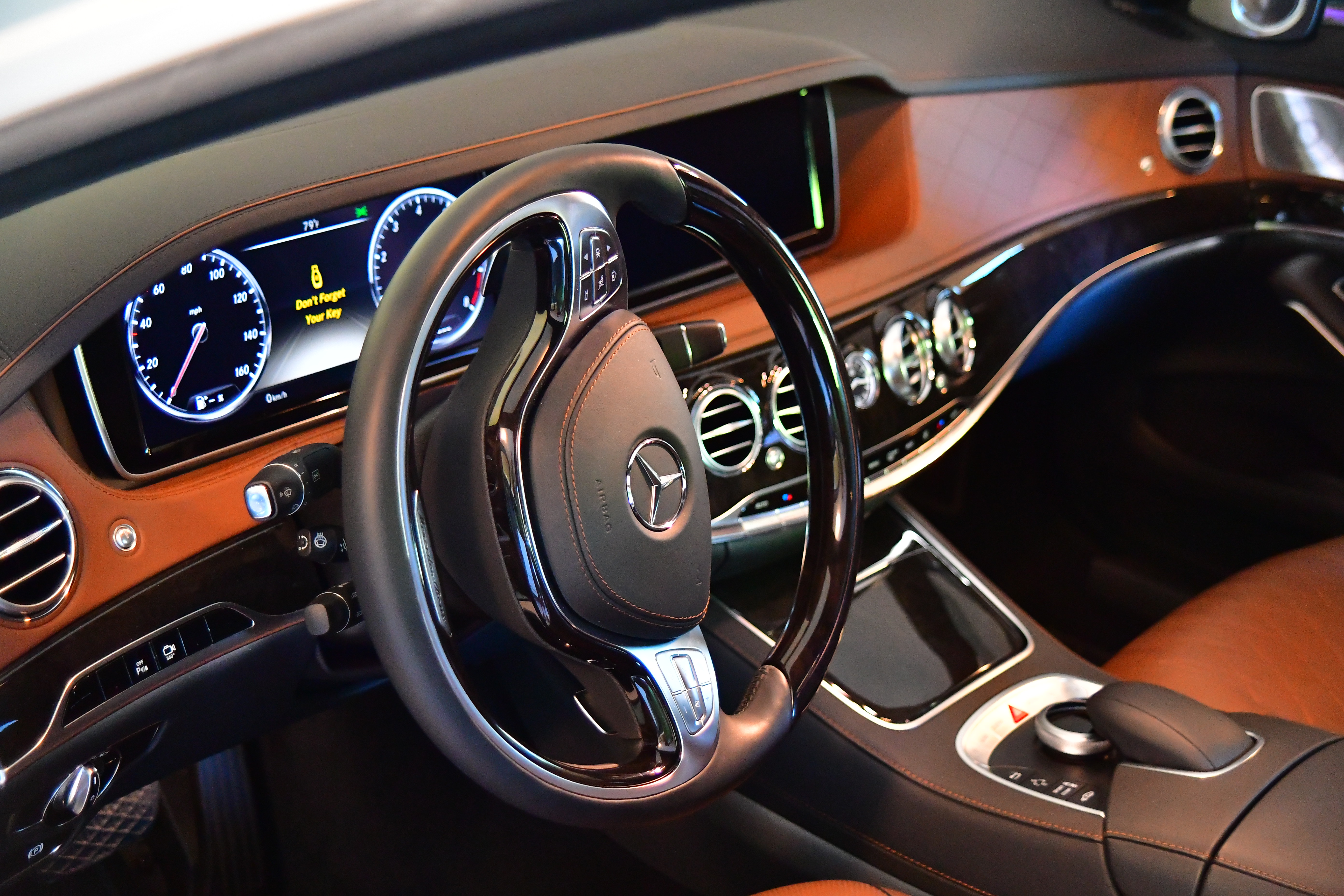
2014 Mercedes S550 interior, 27 July 2016. 2016 Nikon D5, 1996 Nikon 35-105mm AF-D at 62mm, f/4 at 1/60 at Auto ISO 11,400. bigger or camera-original file to explore on your computer.
Even with a 20-year-old zoom, images look great at whatever ISO is needed, in this case, ISO 11,400!

Ryan shops for ties under crummy store lighting, 27 July 2016. 2016 Nikon D5, 1996 Nikon 35-105mm AF-D at 80mm, f/4.2 at 1/125 at Auto ISO 4,000. bigger or camera-original file to explore on your computer.

Katie behind pillows, July 2016. Nikon D5, Nikon 35-105mm AF-D at 105mm, f/4.5 at 1/125 at Auto ISO 25,600. bigger.

Palm, 06 August 2014. Nikon D810, Nikon 35-105mm AF-D at 105mm, f/5.6 at 1/125 at Auto ISO 100, Perfectly Clear. © full resolution image from LARGE BASIC JPG.

Spear Plant, 06 August 2014. Nikon D810, Nikon 35-105mm AF-D at 105mm, f/4.5 at 1/125 at Auto ISO 400, Perfectly Clear. © full resolution image from LARGE BASIC JPG.

Palm Trunk, 06 August 2014. Nikon D810, Nikon 35-105mm AF-D at 65mm, f/4.2 at 1/125 at Auto ISO 140, Perfectly Clear. © full resolution image from LARGE BASIC JPG.

Katie's First Day of Art School, 02 July 2012. (Nikon D800E, Nikon 35-105mm f/3.5-4.5 AF-D at 62mm, f/11 at 1/250, SB-400 flash, AUTO ISO 100, AUTO A3 M1 White Balance, STANDARD Picture Control with +1 Saturation and 6 Sharpening.) bigger.

Katie and some more of her Easter loot, 05 April 2015. Nikon D7200, Nikon SB-400 flash, Nikon 35-105 AF-D at 42mm, f/7.1 at 1/200 at Auto ISO 100, Perfectly Clear V2. Bigger or Full-Resolution.

Old Mission San Luis Rey de Francia, 26 June 2011, 9:36 AM. bigger. Shot with Nikon 35-105mm f/3.5-4.5D set to 35mm at f/4 at 2 seconds on Fuji Velvia 50 with a Nikon engraved-red-letter A2 filter on a Nikon N8008s hand-held (rested on a pew). Not bad for a 2-second exposure! Watch the limited depth-of-field.
Introduction top
Sample Images Intro Specs Performance Compared Recommendations
Compatibility History Production Pricing

Adorama pays top dollar for your used gear.
I use these stores and ScanCafe. I can't vouch for ads below.
|






The Nikon 35-105mm f/3.5-4.5D AF push-pull zoom is a great FX lens that works perfectly on all FX digital and 35mm Nikons.
This could be the only lens you every need, and for $75 used you can't go wrong, although you have a huge choice of new and used FX lenses for Nikon SLRs at every price.
This is an ideal family lens; it's often what's on my D800E whenever we go out because of its great sharpness, small size and perfect zoom range. In its day, it was not cheap; it was a $599 lens new.
Advantages of this 35-105mm are fast speed, almost a stop faster than most zooms at 105mm, handy zoom range, and better build quality and ergonomics than most newer zooms. It zooms longer (105mm) than almost anything else its size, and is smaller than anything else comparable.
It's plenty sharp as shot on my Nikon D800. It's a tough little lens that covers exactly the range I need for family and travel photos. The only other lens I might need to cover everything is a 20mm f/2.8 AF-D. If 105mm isn't long enough, nothing else will be, either.
Focus is entirely internal; the lens and filter ring don't move at all as focused.
The only disadvantage is limited close-focus range. At the 35mm end, the 2.8'/0.85m close focus distance is difficult for self-portaits. At 105mm, this is a very good close-focus range, the same 2.8'/0.85m.
This is an FX lens, and works especially well with on FX, 35mm and DX Nikons like the D4, D800, D800E, D7000, D700, D3X, D300s and F6. It works fantastically on manual-focus cameras like the F2AS, F3, FE and FA, since it has real manual-focus and aperture rings that work exactly as they should.
The 35-105mm f/3.5-4.5 AF-D works great with almost every film and digital Nikon camera made since 1977. If you have a coupling prong added to the diaphragm ring, it's perfect with every Nikon back to the original Nikon F of 1959.
The only incompatibility is that it will not autofocus with the cheapest D40, D40x, D60, D3000, D3100, D5000 or D5100, but if you focus manually, everything else works great. These cameras have in-finder focus confirmation dots to help you.
See Nikon Lens Compatibility for details on your camera. Read down the "AF, AF-D (screw)" column for this lens.
Unlike many Nikon lenses of this era, this optical design was only offered in this lens seen here. There have been many 35-105mm Nikon lenses, but this AF-D version is the only one with these internally-focused optics.
You can see the other versions chronically at Roland Vink's site.
This lens is done in the same mechanical and cosmetic style as the popular 35-70mm f/2.8 AF-D and 70-210mm f/4-5.6 AF and AF-D.
Nikon made about 60,000 of these 35-105mm AF-D lenses.
Corrected for inflation, 2011** |
Dollars at the time** |
|
1995 |
$667 |
$449.95 |
1996 |
$533 |
$369.95 |
1997 |
$450*/$650 |
$319.95*/$459.85 |
1998 |
$390*/$415 |
$279.95*/$299.95 |
2011 |
||
2016 |
* Gray market.
** At full NYC discount. Very few people bought their lenses this inexpensively before 2005.

Nikon 35-105mm f/3.5-4.5 AF-D set to 105mm. enlarge.
Specifications top
Sample Images Intro Specs Performance Compared Recommendations
Nikon calls this the Nikon AF NIKKOR 35-105mm f/3.5-4.5D.
AF: Auto Focus.
NIKKOR: Nikon's brand name for their lenses.
D: The lens tells the camera the distance to the subject, which helps the exposure meter, especially with on-camera flash.
13 elements in 10 groups.
Internal focusing: only the focus ring moves as it focuses, not anything else externally.
It's multicoated, which Nikon calls Nikon Integrated Coating.
7 straight blades.
Yes.
Full-stop clicks and two indices, one for 35mm (green) and one for 105mm (yellow).
Coverage top
Focal Length top
35-105mm.
When used on a DX camera, it gives angles of view similar to what a 50-150mm lens gives when used on an FX or 35mm camera.
2.8 feet (0.85 meters).
Maximum Reproduction Ratio specs top
1:9.4 at 105mm.
Hard Infinity Focus Stop? specs top
Yes.
This is great for astronomy; just turn to the stop and you have fixed laboratory-perfect focus all night.
Yes.
Depth-of-Field Scale specs top
No.
Infra-Red Focus Index specs top
White index near focus scale, only for 35mm.
52mm, plastic.
Does not rotate, but moves in and out with the lens as zoomed.
Nikon specifies 2.85" (72.5mm) extension from flange at 35mm by 2.7" (68.5mm) diameter.
14.585 oz. (413.45g),measured.
HB-5 plastic bayonet.
Made in Japan.
TC-200/201 and TC-14A, but they disable autofocus, so who cares?
Performance top
Sample Images Intro Specs Performance Compared Recommendations
Overall Auto and Manual Focus Bokeh Color Coma
Distortion Ergonomics Falloff Filters Focus Breathing
Color Fringes Macro Min & Max Apertures Mechanics
Sharpness Spherochromatism Sunstars Survivability
Overall performance top
The Nikon 35-105mm f/3.5-4.5 AF-D works great. It's small, fast and light, with performance typical for its era.
Auto and Manual Focus performance top
AF Speed
AF is moderate; one full turn (two half-turns) of the AF screw pulls focus from infinity down to 8 feet.
AF Accuracy
AF was always dead-on.
Manual Focus
Manual focus is a bit fast at the tele end.
The entire focus range is covered in just one-eighth of a turn.
Bokeh performance top
Bokeh, the character of out of focus areas, not simply how far out of focus they are, is usually quite nice.
It usually looks great, and only looks poor at 105mm and the very closest focus distance.
Color Rendition performance top
Color rendition seems to match my other modern Nikkors.
Coma performance top
Coma is minor.
Coma, also called saggital coma flare, is weird smeared blobs that appear around bright points of light in the corners. They happen with fast and wide lenses at large apertures. Coma goes away as stopped down, and tends not to be seen in slower and tele lenses. Coma is an artifact of spherical aberration.
Distortion performance top
The Nikon 35-105mm f/3.5-4.5 AF-D has potentially strong, but easy to correct, distortion.
Shoot it at around 45mm and there is no distortion.
It can be corrected at other settings by plugging these figures into Photoshop's lens distortion filter. These aren't facts or specifications, they are the results of my research that requires hours of photography and calculations on the resulting data.
On FX and Film at infinity |
Visible Effects |
|
35mm |
strong barrel |
+4.5 |
50mm |
minor pincushion |
-1.5 |
70mm |
strong pincushion |
-4.0 |
105mm |
strong pincushion |
-4.0 |
© 2011 KenRockwell.com. All rights reserved.
Used on recent digital cameras like the D90, D3100, D3200, D5000, D5100, D7000, D4, D800 and D800E, the distortion can be set to correct automatically in-camera!
Ergonomics performance top
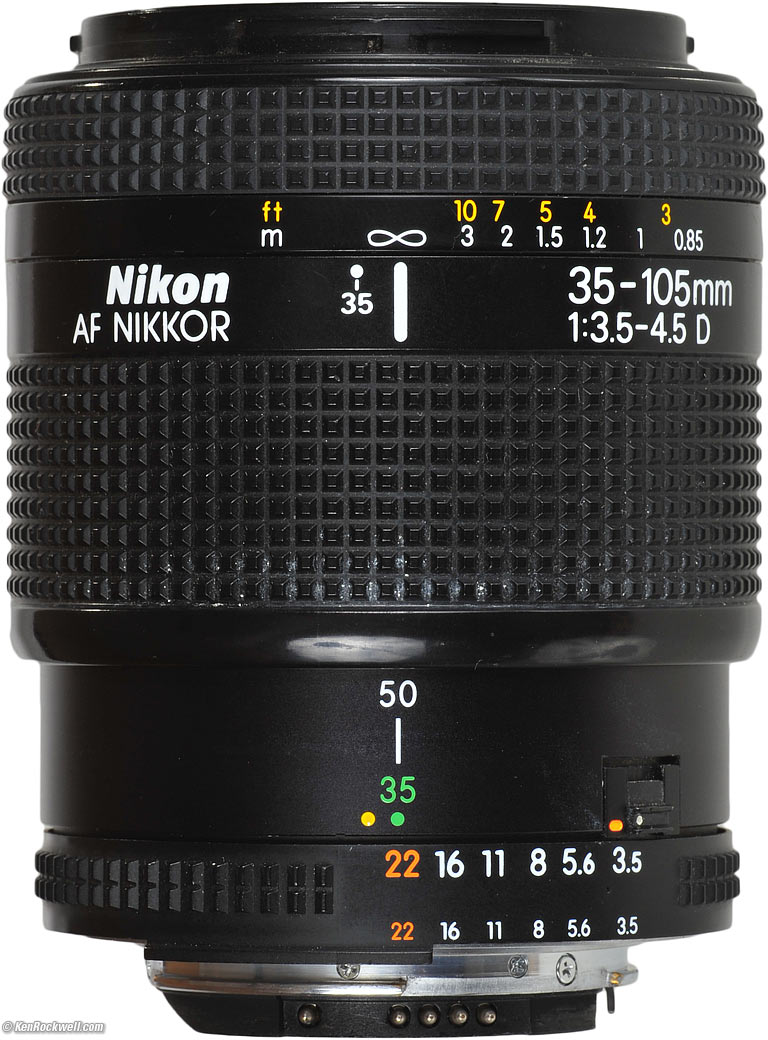
Nikon 35-105mm f/3.5-4.5 AF-D set to 50mm. enlarge.
Ergonomics are great.
Just grab the big, fat middle waffle-pattern section to mount and unmount, and to zoom.
Zooming is easy: just push and pull. It's so easy that one fingertip can zoom when shooting with one hand! It's cammed to be logarithmic, as it should: equal displacement of the zoom control gives the same percentage change anyplace along its travel. It moves so well that it can flop forward if your camera points down; no worries, it zooms with a fingertip as soon as you draw your camera to your eye.
It zooms in the correct direction: longer is away from you.
EXIF data always agreed exactly with the focal length indicated on the lens.
There is no macro mode to befuddle things. The internal focus works great, and the lens stays small and tight regardless of you you have it set.
The only gotcha is that there is no macro range, and likewise, close focus at 35mm may not always be close enough.
Falloff (darkened corners) performance top
Falloff on FX is minimal, and only barely visible at the largest apertures.
It will be even less of an issue on DX (see crop factor).
Filters, Use with performance top
There is no problem with vignetting with thick 52mm filters.
Don't try to stack filters, at least at the 35mm setting, or you will get some vignetting.
The filter ring never rotates.
Focus Breathing performance top
Of interest mostly to cinematographers focusing back and forth between two subjects, the image from the Nikon 35-105mm f/3.5-4.5 AF-D gets smaller as focused more closely.
Lateral Color Fringes performance top
There are no lateral color fringes on the D3 or D7000, which correct them automatically as do all current Nikons.
Macro performance top
The 35-105mm AF-D has no special macro ability.
Most lenses get much closer.
Maximum and Minimum Apertures performance top
Maximum |
Minimum |
|
35mm |
f/3.5 |
f/22 |
50mm |
f/3.8 |
f/25 |
70mm |
f/4.2 |
f/25 |
105mm |
f/4.5 |
f/29 |
Mechanics performance top
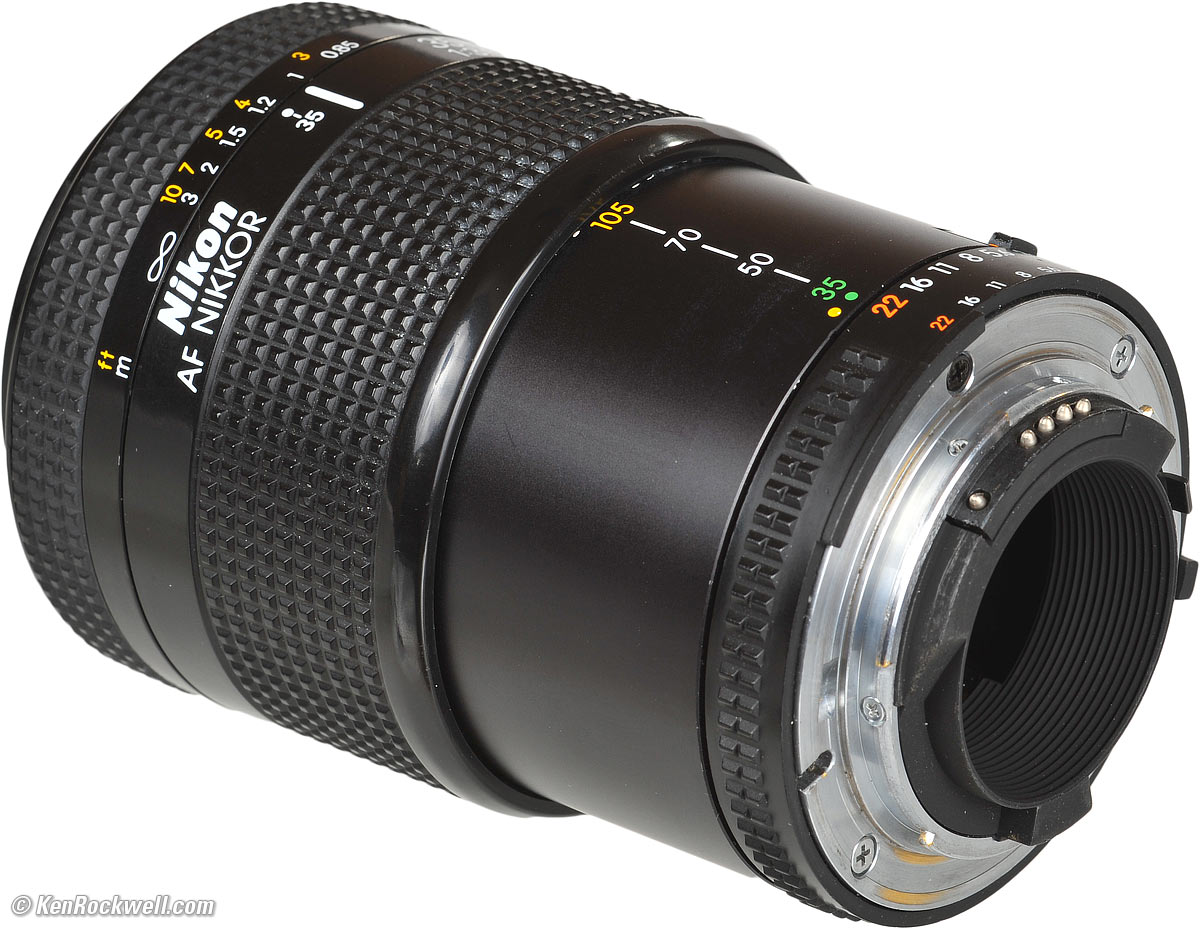
Nikon 35-105mm f/3.5-4.5 AF-D set to 105mm. enlarge.
The mechanics are better than most lenses today. It's a very solid lens, especially for the price.
Filter Threads
Plastic.
Hood
Plastic bayonet.
Hood Bayonet
Plastic.
Focus Ring
Metal and plastic; rubber covered.
Depth-of-Field Scale
None.
Zoom Ring
Solid plastic, rubber covered.
Aft Barrel Exterior
Metal.
Internals
Seem like plenty of metal.
Aperture Ring
Plastic with painted numbers.
Focus Geartrain
Metal.
Mount
Dull-chromed brass.
Markings
Paint.
Identity
Painted on barrel.
Serial Number
Laser engraved onto bottom rear of aperture ring.
Ass-Gasket (rain seal at mount)
No.
Noises When Shaken
Mild clunking from the diaphragm blades and actuation system.
Made in
Japan.
Sharpness performance top
Warning 1: Image sharpness depends more on you than your lens.
Warning 2: Lens sharpness doesn't mean much to good photographers.
With those caveats, the Nikon 35-105mm f/3.5-4.5 AF-D is good. It's always sharp in the center. The corners on FX can be softer at the largest aperture, sharpening-up very well when stopped down a stop or two.
For a mid-priced zoom intended for 35mm use, it works extremely well on FX and DX digital cameras, especially my D800E. On the 36 MP D800E it's a little less sharp in the corners, but super-sharp and contrasty everywhere it matters.
Spherochromatism performance top
None seen.
Fast, long lenses often show spherochromatism, which is when out-of-focus highlights take on slight color fringes, and as a slower lens, I didn't expect to see any.
Laymen sometimes mistakenly call spherochromatism "color bokeh."
Sunstars performance top
With its straight 7-bladed diaphragm, this 35-105 makes magnificent Nikon-standard 14-pointed sunstars on bright points of light.
It's much better than any of the newer "rounded" diaphragm blades that make poor sunstars, if any at all.
Survivability performance top
The Nikon 35-105mm f/3.5-4.5 AF-D seems pretty tough, since focus is internal.
My biggest concern is not to damage the push-pull zoom mechanism
I suspect if it takes a hit, the biggest problem might be chipping the front hard plastic filter thread.
Compared top
Sample Images Intro Specs Performance Compared Recommendations
Nikon has made a zillion 35-105 zooms, and even more if you open up the focal length range, so I'll keep this simple.
Compared to other 35-105mm zooms, this is Nikon's newest. As Nikon's newest 35-105mm, it offers the refinement of internal focus, which both improves ergonomics and offers a smaller size than any other Nikon 35-105.
In exchange for the small size and great handling, this 35-105mm f/3.5-4.5D loses any macro ability.
The fully professional Nikon 35-70mm f/2.8D has the same outward appearance with more speed, less distortion and an even tougher package, but with a more restricted zoom range at a much higher price and with a lot more weight.
Recommendations top
Sample Images Intro Specs Performance Compared Recommendations
The Nikon 35-105mm f/3.5-4.5 AF-D is a great, basic lens with which you could shoot for a lifetime on 35mm or FX. It's light, flexible, inexpensive and has great performance.
There are a load of choices in this focal length range, and at about $75 used today, is a bargain.
I wouldn't use it on DX; for DX, I'd use any of Nikon's dedicated DX lenses. This is a full-frame FX lens.
If you find this review helpful, this free website's biggest source of support is when you use these links, especially this link directly to this lens at eBay (see How to Win at eBay), when you get anything, regardless of the country in which you live. Thanks! Ken.
Deployment
I'd pitch the flat Nikon cap that came with this lens when new, and get a new "pinch" type cap. I'm not kidding: these new, fatter, caps are much easier to use.
I'd leave either a 52mm Nikon Clear (NC - UV) filter, or a 52mm Hoya Super HMC UV on the lens at all times. I would leave the hood at home.
If I was working in nasty, dirty areas, I'd forget the cap, and use an uncoated 52mm Tiffen UV filter instead. Uncoated filters are much easier to clean, but more prone to ghosting.
For color slides like Velvia 50, I use an old Nikon A2 or new 52mm Hoya HMC 81A outdoors.
For B&W film outdoors, I'd use an old Nikon Y48 or O56, or a new 52mm Hoya HMC K2 Yellow or 52mm Hoya HMC Orange.
© Ken Rockwell. All rights reserved. Tous droits réservés. Alle Rechte vorbehalten.
Help Me Help You
I support my growing family through this website, as crazy as it might seem.
The biggest help is when you use any of these links when you get anything. It costs you nothing, and is this site's, and thus my family's, biggest source of support. eBay is always a gamble (see How to Win at eBay), but all the other places always have the best prices and service, which is why I've used them since before this website existed. I recommend them all personally.
If you find this page as helpful as a book you might have had to buy or a workshop you may have had to take, feel free to help me continue helping everyone.
If you've gotten your gear through one of my links or helped otherwise, you're family. It's great people like you who allow me to keep adding to this site full-time. Thanks!
If you haven't helped yet, please do, and consider helping me with a gift of $5.00.
As this page is copyrighted and formally registered, it is unlawful to make copies, especially in the form of printouts for personal use. If you wish to make a printout for personal use, you are granted one-time permission only if you PayPal me $5.00 per printout or part thereof. Thank you!
Thanks for reading!
Mr. & Mrs. Ken Rockwell, Ryan and Katie.