Nikon 18mm f/2.8
FX Ultrawide AF-D (1994-2006)
Sample Images Introduction Specifications

Nikon 18mm f/2.8 AF-D (FX, DX and 35mm coverage, 77mm metal filter ring, 13.3 oz/376g, about $700 used). enlarge. I got mine at this direct link to it at eBay (see How to Win at eBay), and it's also available at Amazon. This free website's biggest source of support is when you use those and these links when you get anything, regardless of the country in which you live. Thanks! Ken.
2:22 PM, 22 February 2022 Nikon Reviews Nikon Lenses Nikon Flash All Reviews
Why Fixed Lenses Take Better Pictures
Sharpness Comparison to all other 18mm lenses 11 August 2010
Ideal Uses: Perfect for use on FX digital and film.
Not for: I wouldn't bother with this on a DX camera. I'd use any DX lens, like the 18-55mm AF-P kit lens, for better results on DX.
| Optics: |  |
| Mechanics: |  |
| Ergonomics: |  |
| Usefulness: | |
| Availability: |  |
| Overall: | |
Sample Images top
Sample Images Intro Specifications
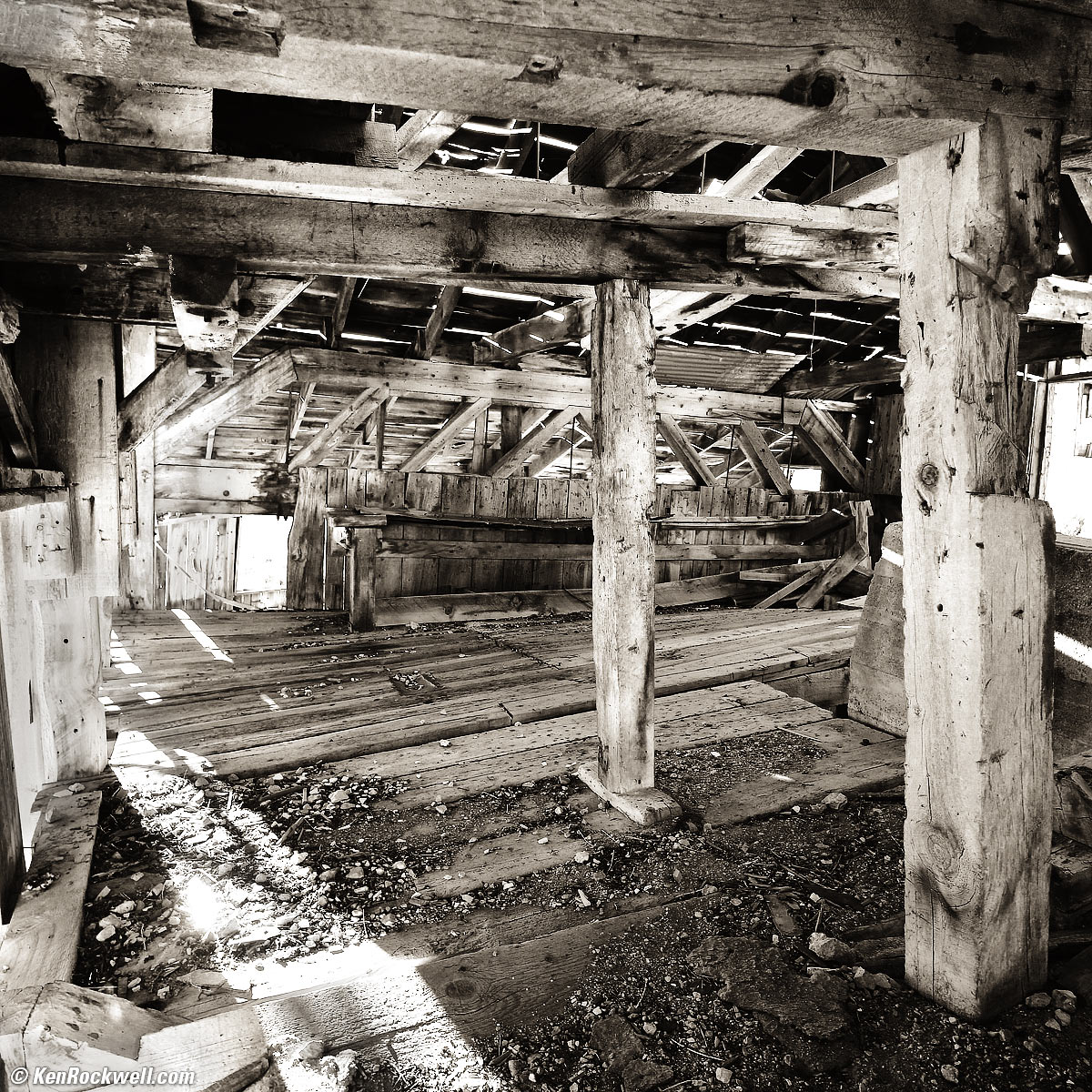
Inside a Creepy Abandoned California Mine, October, 2017. Nikon D850, Nikon 18mm f/2.8 AF-D, f/7.1 hand-held at 1/20 at ISO 200, Perfectly Clear v3.5, split-toned print. bigger.
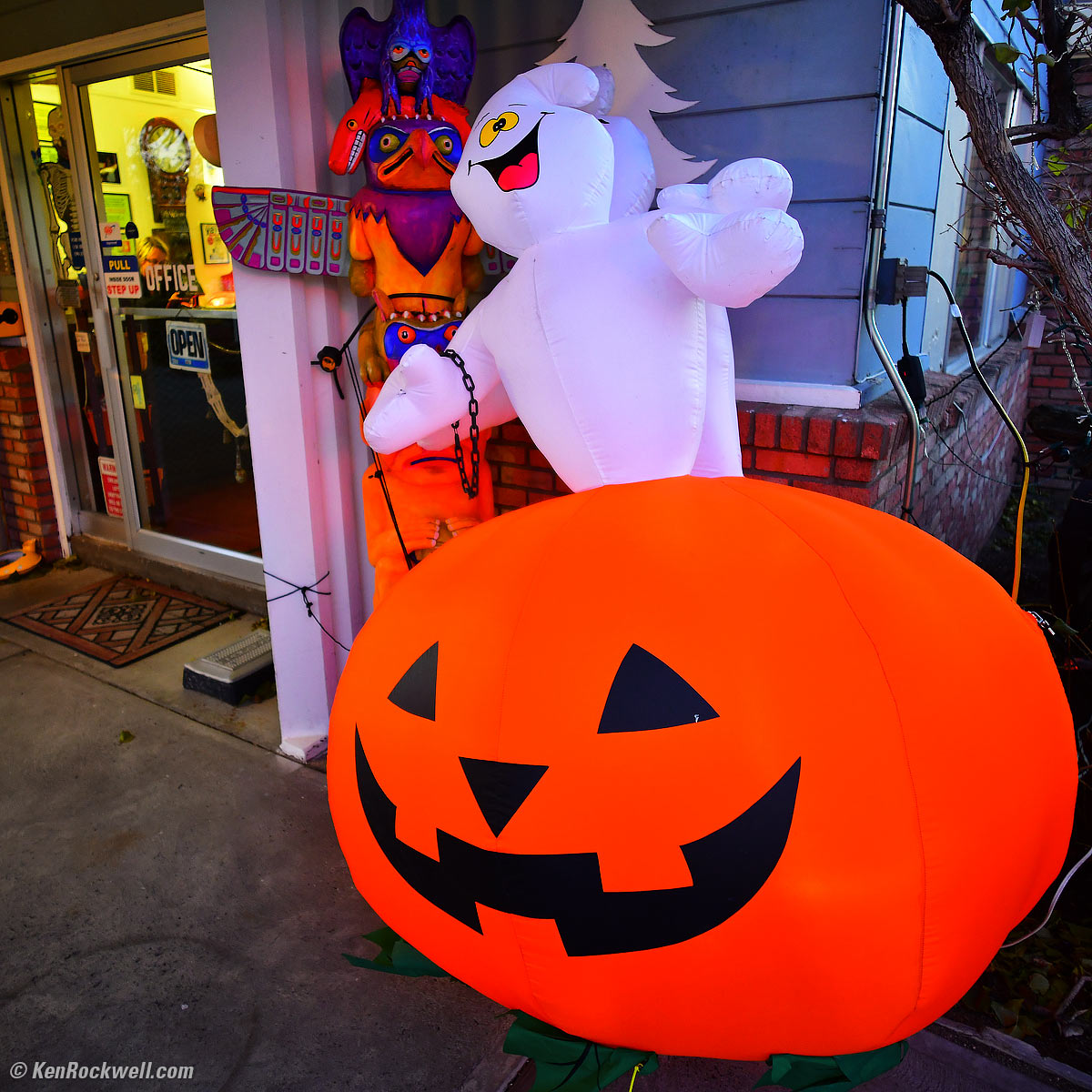
The Great Pumpkin, Bridgeport, October, 2017. Nikon D850, Nikon 18mm f/2.8 AF-D, f/2.8 hand-held at 1/20 at Auto ISO 1,000, Perfectly Clear v3.5. bigger.
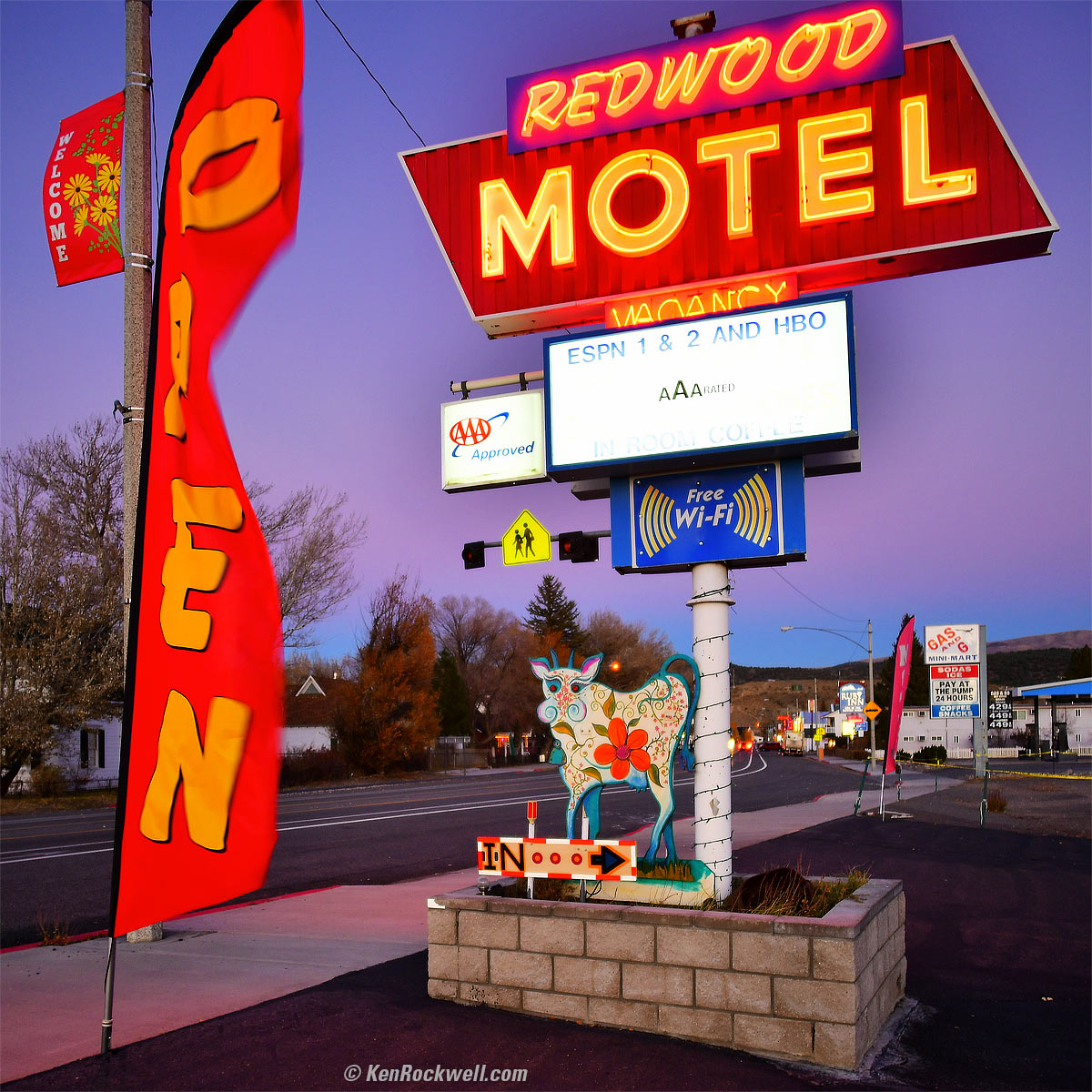
Redwood Motel, October, 2017. Nikon D850, Nikon 18mm f/2.8 AF-D, f/2.8 hand-held at 1/20 at Auto ISO 140, Perfectly Clear v3.5. bigger.
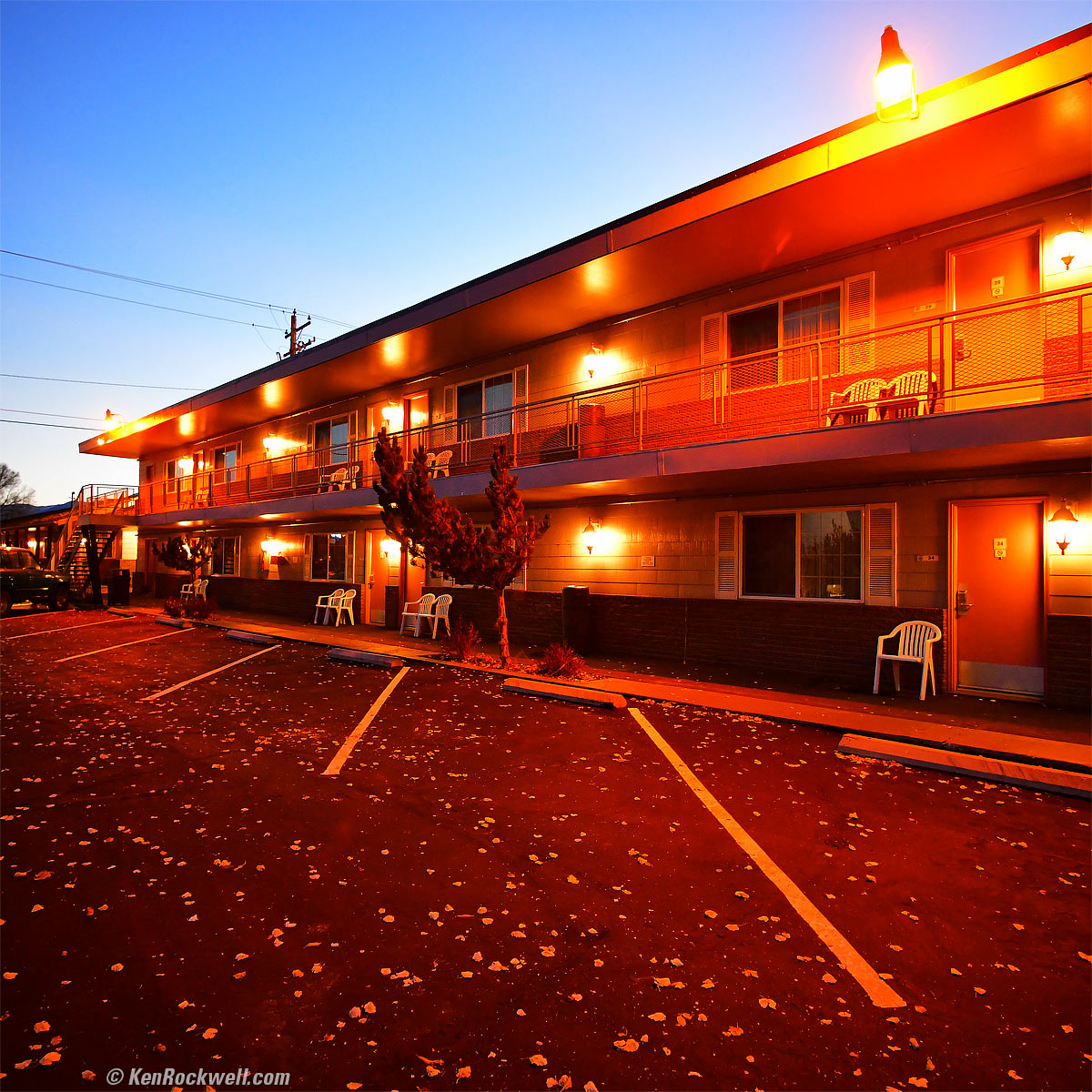
Motel Parking Lot at Dusk, October, 2017. Nikon D850, Nikon 18mm f/2.8 AF-D, f/4 hand-held at 1/20 at Auto ISO 2,200, Perfectly Clear v3.5. bigger.
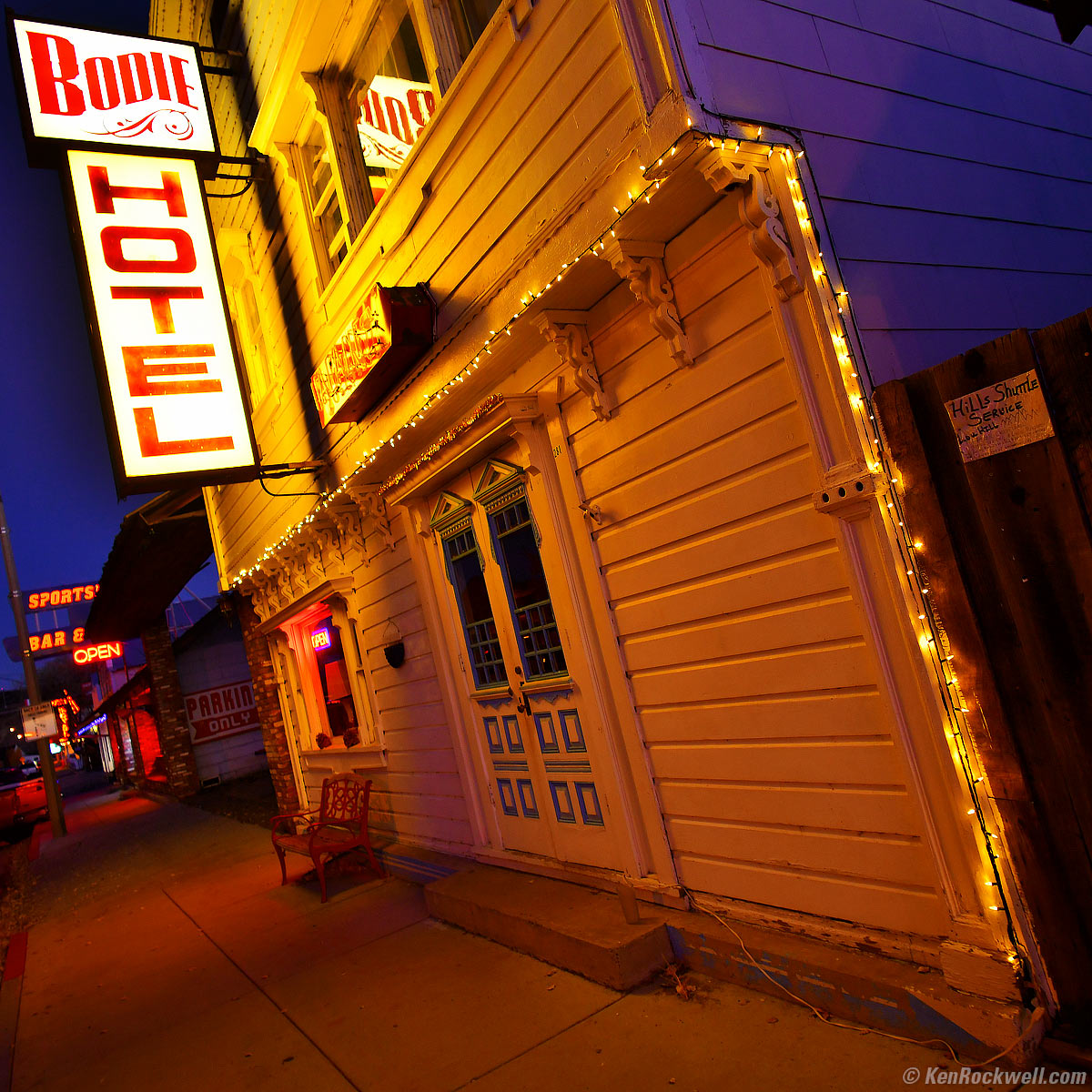
Bodie Hotel at Dusk, October, 2017. Nikon D850, Nikon 18mm f/2.8 AF-D, f/4 hand-held at 1/20 at Auto ISO 450, Perfectly Clear v3.5. bigger.
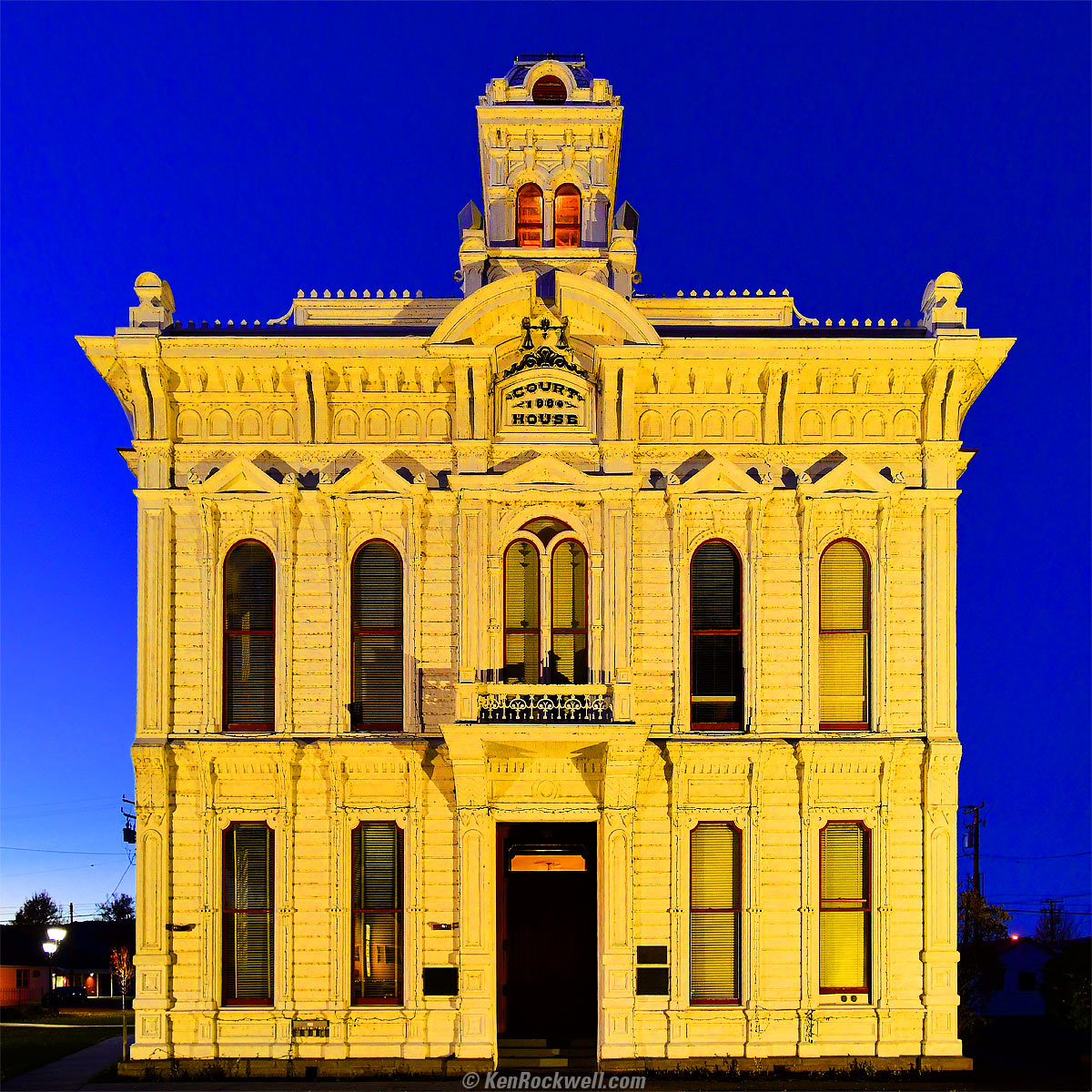
Mono County Court House after Sunset, October, 2017. Nikon D850, Nikon 18mm f/2.8 AF-D, f/4 hand-held at 1/20 at Auto ISO 1,000, Perfectly Clear v3.5. bigger.
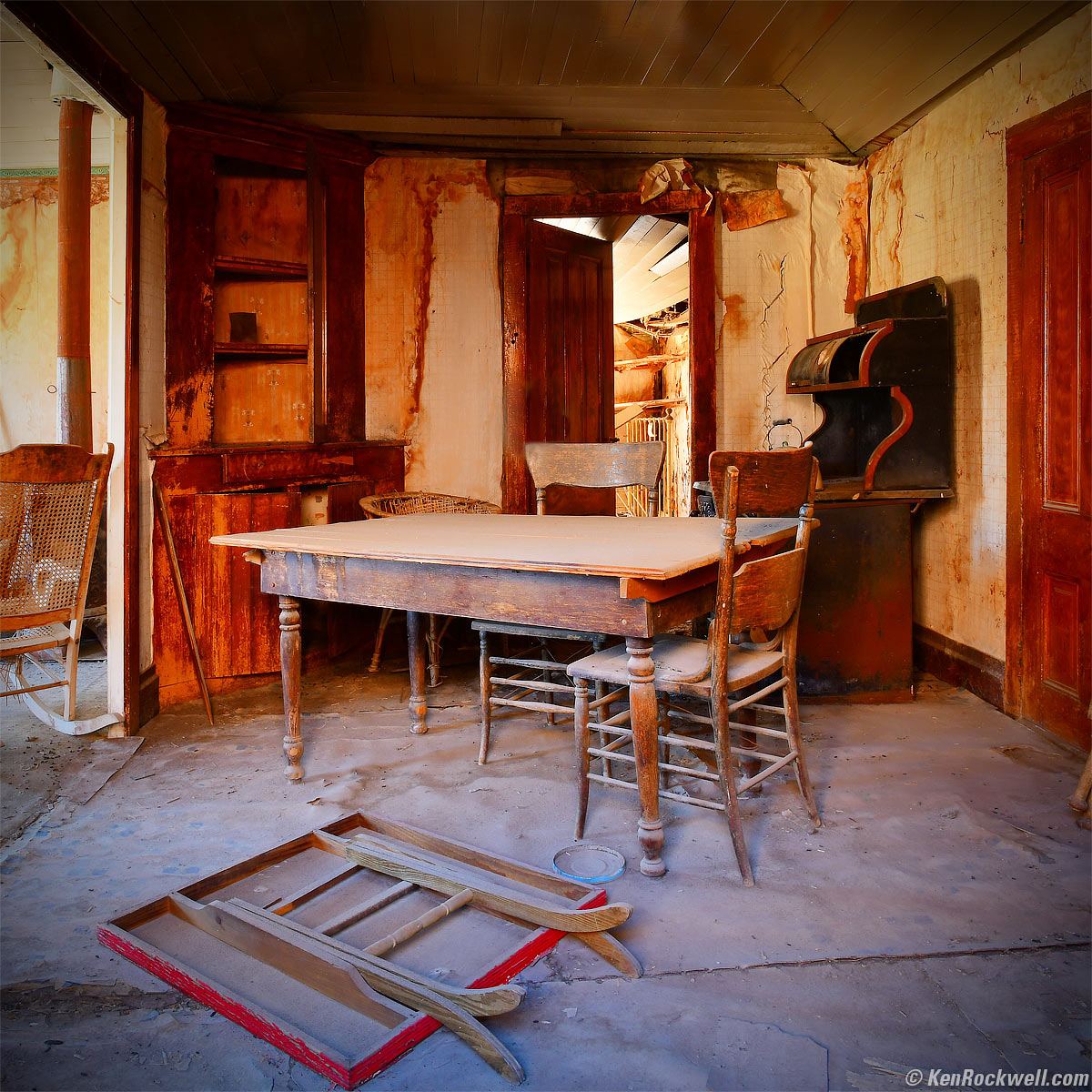
The Mortician's Kitchen, Bodie, October, 2017. Nikon D850, Nikon 18mm f/2.8 AF-D, f/16 hand-held against a window for three seconds at ISO 200, Perfectly Clear v3.5. bigger.
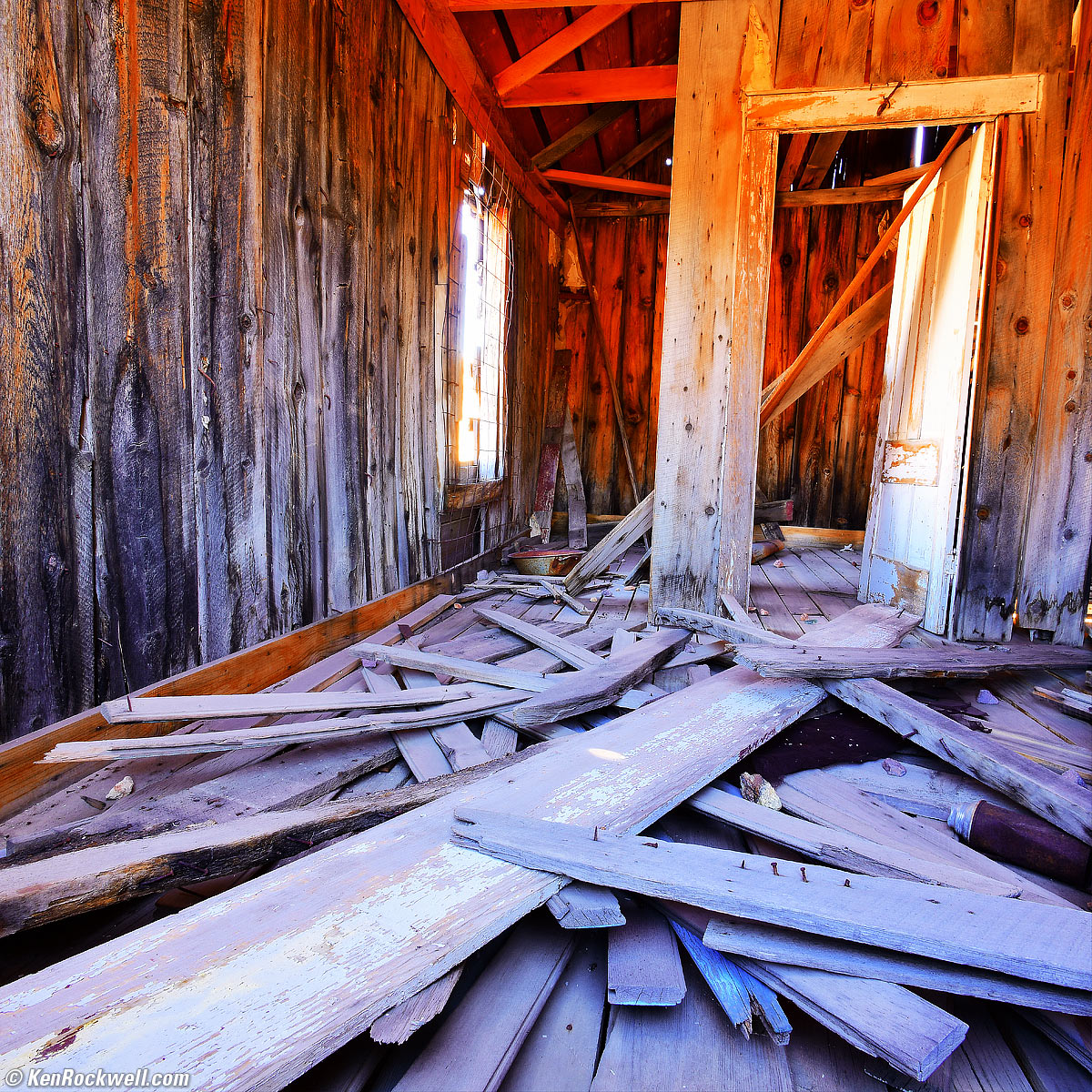
Big Mess of Wood in Bodie, October, 2017. Nikon D850, Nikon 18mm f/2.8 AF-D, f/16 hand-held against a window ledge for three seconds at ISO 64, Perfectly Clear v3.5. bigger.
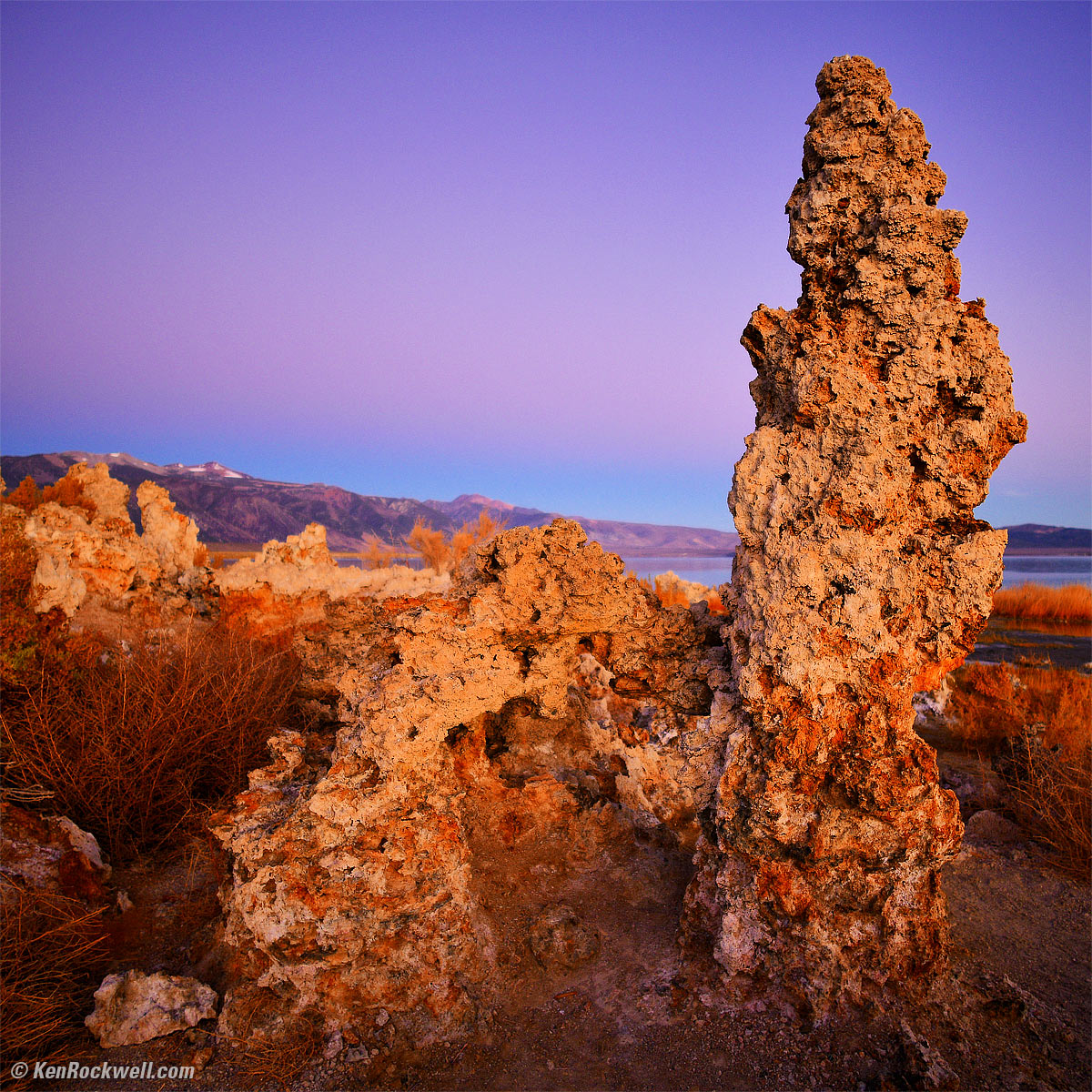
Tufa before Dawn, Mono Lake, October, 2017. Nikon D850, Nikon 18mm f/2.8 AF-D, f/2.8 hand-held at 1/20 at Auto ISO 220, Perfectly Clear v3.5. bigger.

Sunstar and Golden Leaves at Silver Lake, October, 2017. Nikon D850, Nikon 18mm f/2.8 AF-D, f/22 hand-held at at 1/30 at Auto ISO 64, Perfectly Clear v3.5. bigger.

Sunstar and Golden Leaves, October, 2017. Nikon D850, Nikon 18mm f/2.8 AF-D, f/16 hand-held at 1/40 at Auto ISO 64, Perfectly Clear v3.5. bigger.
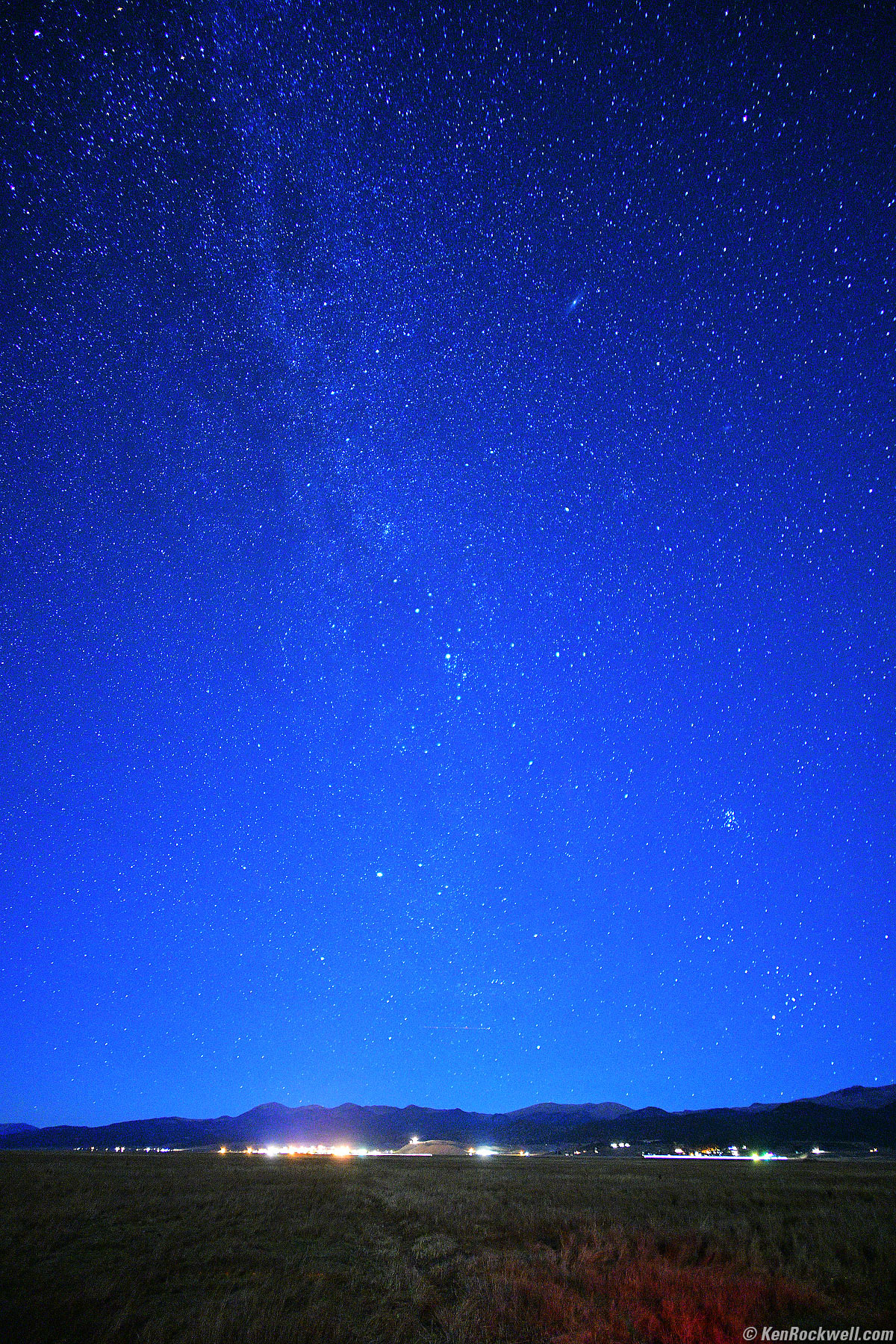
Bridgeport under Starlight, October, 2017. Nikon D850, Nikon 18mm f/2.8 AF-D, f/2.8 for 30 seconds at ISO 6,400, Perfectly Clear v3.5. bigger.

Ahwahnee Hotel Interior, Yosemite Valley, October, 2017. Nikon D850, Nikon 18mm f/2.8 AF-D, f/11 hand-held at 1/10 at Auto ISO 4,500, Perfectly Clear v3.5. bigger.
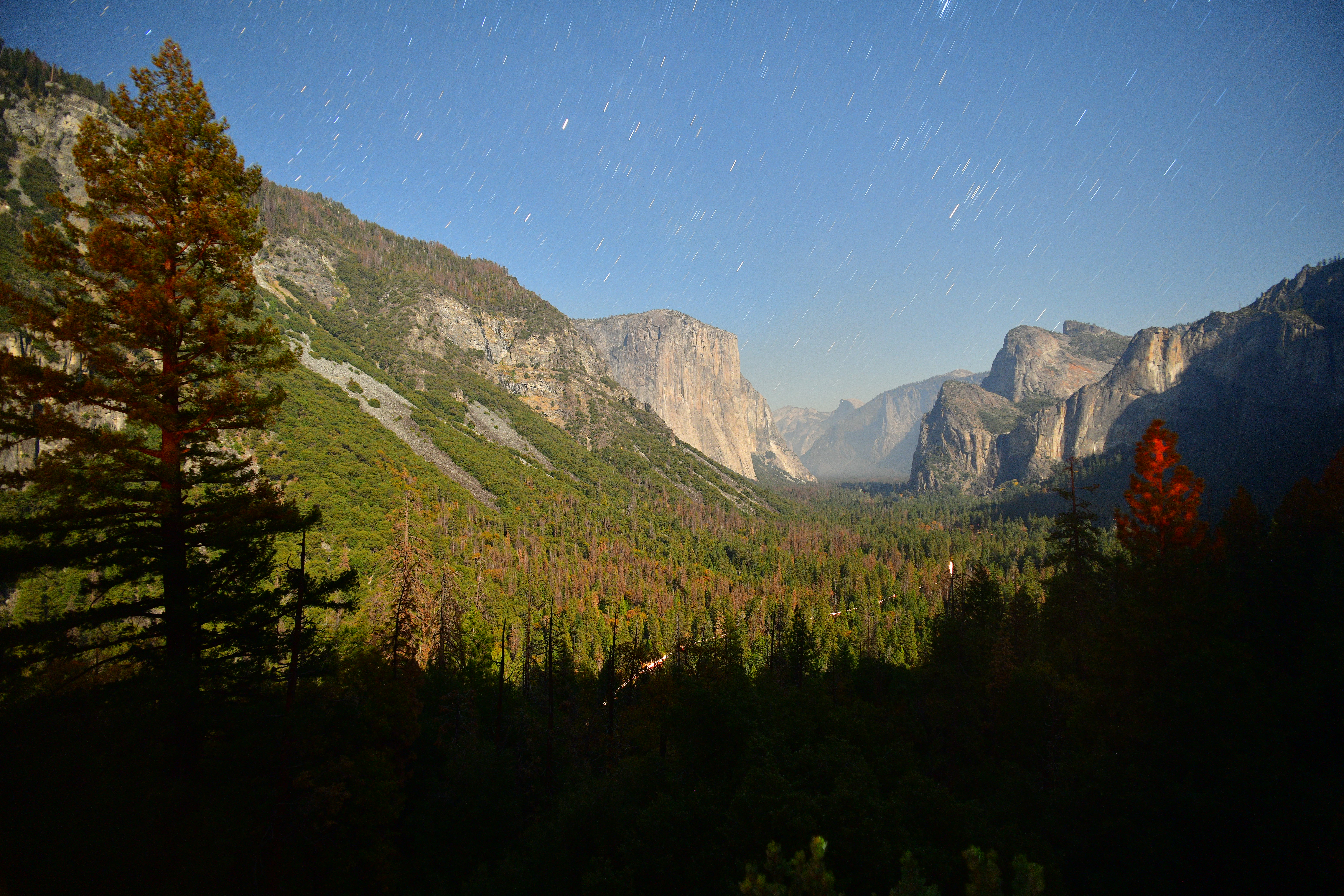
Yosemite Tunnel View by moonlight on a hazy night, October, 2017. Nikon D850, Nikon 18mm f/2.8 AF-D, f/4 at 4 minutes at ISO 800. bigger or camera-original © file. Since it was hazy, I increased the contrast and thus exaggerated the corner falloff.

Introduction top
Sample Images Intro Specifications

I buy only from these approved sources. I can't vouch for ads below. |



This Nikon 18mm f/2.8 AF-D lens is very rare because it has always been an expensive professional lens. Few people bought it when new because it cost over $1,000 in its day, and it wasn't much different in performance than the 20mm f/2.8 AF-D which did pretty much the same thing in a smaller, lighter, plasticier package for less than half the price. The 20mm is still available new today, while this exotic professional 18mm was discontinued in 2006.
Nikon only sold about 7,500 of these 18mm lenses, while it's sold about a quarter-million 20mm f/2.8 AF, and still makes the 20/2.8 today. Zooms are even more popular: Nikon sold 50,000 of the 20-35mm, 140,000 of the 17-35mm as of 2017 and still sells them, 110,000 of the 18-35mm and 350,000 of the 14-24mm, so far.
This 18mm excels at being the widest possible Nikon autofocus lens in the smallest, toughest package. All the Nikon wide zooms are much bigger and heavier, and the spectacular but plasticy 20mm f/1.8G is also bigger and heavier.
This 18mm is expensive because it's a tough, professional lens and even uses an aspherical element, a first in its day along with the incomparable Nikon 28mm f/1.4 AF-D. The 28mm has a precision ground aspherical element, while this 18mm has a molded one.
This 18mm is sharper in the center at wide apertures than the 20mm f/2.8 AF.
The 20mm f/1.8G is all plastic and weighs less than this 18mm, but is a bit bigger.
The newest 20mm f/1.8G is by far the sharpest of any Nikon 13mm, 14mm, 15mm, 18mm or 20mm fixed lens.
Unlike the less expensive 20/2.8, this 18mm comes in a nice fitted tubular case with an HB-8 hood.
When using this 18mm AF lens, be sure to keep your fingers away from the focus ring, which turns anytime the camera attempts to autofocus. There is no way to disengage it.
The 18mm f/2.8 AF-D has the same tough build and styling as the 28mm F/1.4D AF, 20-35mm f/2.8D AF and 85mm f/1.4D AF, which means a nice metal filter thread. The only plastic is the AF window and the aperture ring. This 18mm is much tougher than any of the current Nikon ultrawides and about s tough as the ancient 17-35/2.8 that Nikon still sells today.
Nikon's newer FX cameras, like my D850, easily correct this lens' complex distortions.
Compatibility back to intro back to top
This traditional AF lens becomes manual-focus-only on the FTZ, with a CPU for full data communication, aperture control and all exposure modes. It has no internal optical stabilization.
The 18mm f/2.8 AF-D works great with almost every film and digital Nikon camera made since 1977. If you have a coupling prong added to the diaphragm ring, it's perfect with every Nikon back to the original Nikon F of 1959.
The only incompatibility is that it will not autofocus with the cheapest DX cameras like the D40, D40x, D60, D3000 or D5000, but if you focus manually, everything else works great. These cameras have in-finder focus confirmation dots to help you.
See Nikon Lens Compatibility for details on your camera. Read down the "AF, AF-D (screw)" column for this lens.
Specifications top
Sample Images Intro Specifications
Name
Nikon calls this the Nikon AF Nikkor 18mm f/2.8D.
AF: Auto Focus.
D: The lens tells the camera the distance to the subject, which helps the exposure meter, especially with on-camera flash.
Optics
13 elements in 10 groups.
One molded aspheric element.
RF: Rear focusing.
It's multicoated, which Nikon calls Nikon Integrated Coating.
Diaphragm
7 straight blades.
Stops down to f/22.
Close Focus
0.85 feet (10 inches or 0.25m).
Maximum Reproduction Ratio
1:9.1
Hard Infinity Focus Stop?
Yes.
This is great for astronomy; just turn to the stop and you have fixed laboratory-perfect focus all night.
Focus Scale
Yes.
Depth-of-Field Scale
Yes.
Infra-Red Focus Index
Yes: White dot in depth-of-field scale.
Aperture Ring
Yes, plastic.
Full-stop clicks.
Filter Thread
77mm, metal.
Does not rotate or move, ever.
Size
3.231" diameter x 2.276" extension from flange (82.09 x 57.81 mm), measured.
Nikon specifies 3.23" (82mm) diameter by 2.28" (58mm) extension from flange, or 2.70" (68.5mm) overall.
Weight
Serial number starting in 2: 13.380 oz. (379.3 g), measured.
Serial number starting in 4: 13.280 oz. (376.5g), measured.
Nikon specifies 13.4 oz. (380g), never having updated its specification when it lightened the lens.
Hood
HB-8 plastic bayonet, included.
These are impossible to find used. They are the same hood as the 20-35mm f/2.8 AF-D.
Case
CL-17, included.
Made in
Japan.
Teleconverters
TC-200/201 and TC-14A, but why?
Introduced
April 1994.
Nikon Product Number
1911.
Price, USA
About $700 used if you know How to Win at eBay, February 2022
About $600 used if you know How to Win at eBay, February 2018
About $800 used if you know How to Win at eBay, October 2017
Over $1,000 new 1994 ~ 2006.
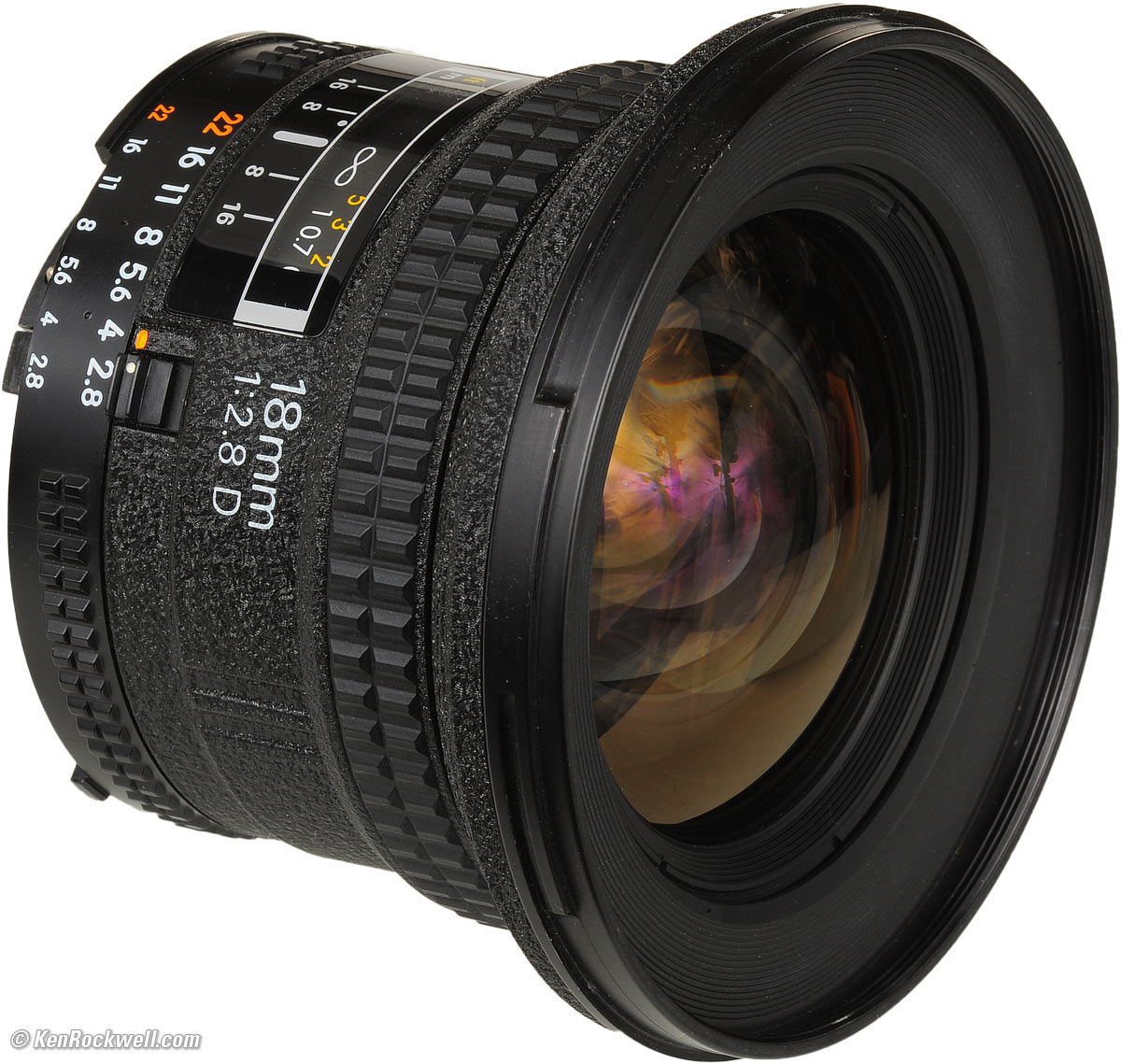
Nikon 18/2.8. enlarge.
Performance top
Sample Images Intro Specifications
Performance is certainly usable, but unfortunately for the price, almost identical to or slightly worse than the smaller and less expensive 20mm f/2.8 AF.
That's why I put this 18mm lens in Nikon's 10 Worst Lenses: because it works well enough, but really ought to be better for the price.
If you're looking in the corners closely for sharpness, you need to get the 14-24mm or 16-35mm VR instead for FX cameras.
Autofocus
AF speed is very fast.
One full turn of the AF screw focuses the lens from infinity to 1.5.' Whew, that's fast!
Focus Breathing
Focus breathing is the image changing size as focused in and out. It's important to cinematographers because it looks funny if the image changes size as focus gets pulled back and forth between actors. If the lens does this, the image "breathes" by growing and contracting slightly as the dialog goes back and forth.
The image from this Nikon 18 2.8 gets only very slightly smaller as focussed more closely; you'll never see it in any actual use.
Color Balance
Color balance was a point or two cooler than the 20/2.8, probably not enough to ever notice.
Distortion
Distortion is complex. Here's the horizon on FX:
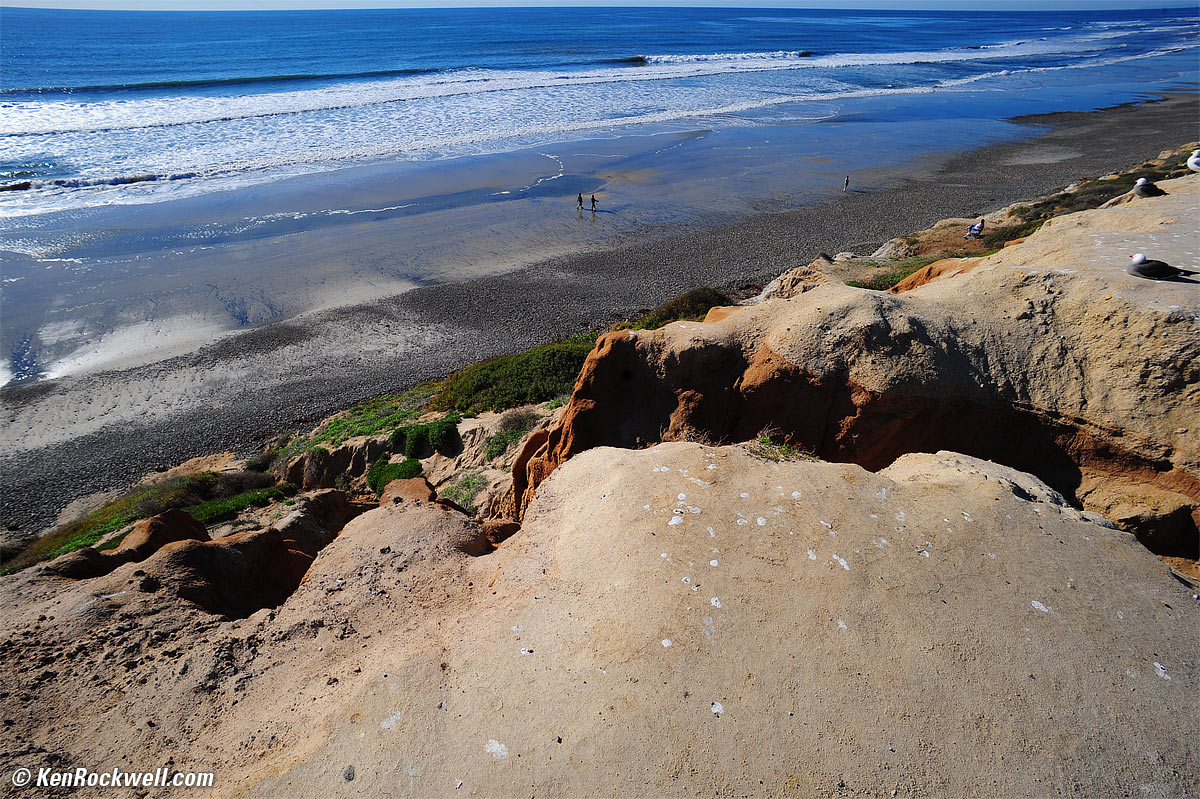
Distortion of the horizon on FX. enlarge.
Photoshop CS2's lens distortion filter is of no use to correct this complex distortion on FX, however on DX you can correct the barrel distortion with these figures:
FX and Film |
||
∞ |
0.0** |
+3.0* |
10' (3m) |
+3.0* |
© 2009 KenRockwell.com. All rights reserved.
* Minor waviness remains.
** Significant waviness remains.
Ergonomics

Nikon 18mm f/2.8. enlarge.
This is a very standard lens with no surprises.
Be sure to keep your hand off the focus ring during autofocus.
Manual focus feels nicer than most AF lenses, but be sure to set your camera to M before turning the ring.
Falloff (darkened corners) back to performance back to top
Falloff on FX is plenty wide open, and not a problem stopped down.
It won't be an issue at all on DX (see crop factor).
I've exaggerated this by shooting a gray field and placing these on a gray background.
Nikon 18mm f/2.8D falloff on FX and 35mm at infinity, no correction:
© 2017 KenRockwell.com. All rights reserved. |





Filters, use with
There is no vignetting on FX with one filter.
Forget trying to use two filters at the same time.
Any vignetting gets worse at f/16.
Any vignetting gets a tiny bit worse at closer focus distances.
Flare and Ghosts
It has lots of little ghosts; worse than the 20/2.8 AF.
You need to use the obnoxious hood included, unlike with the 20mm AF whose hood you don't need.
Focus Breathing
As you pull focus in and out, the barrel distortion gets stronger as you pull in focus.
Mechanics and Construction
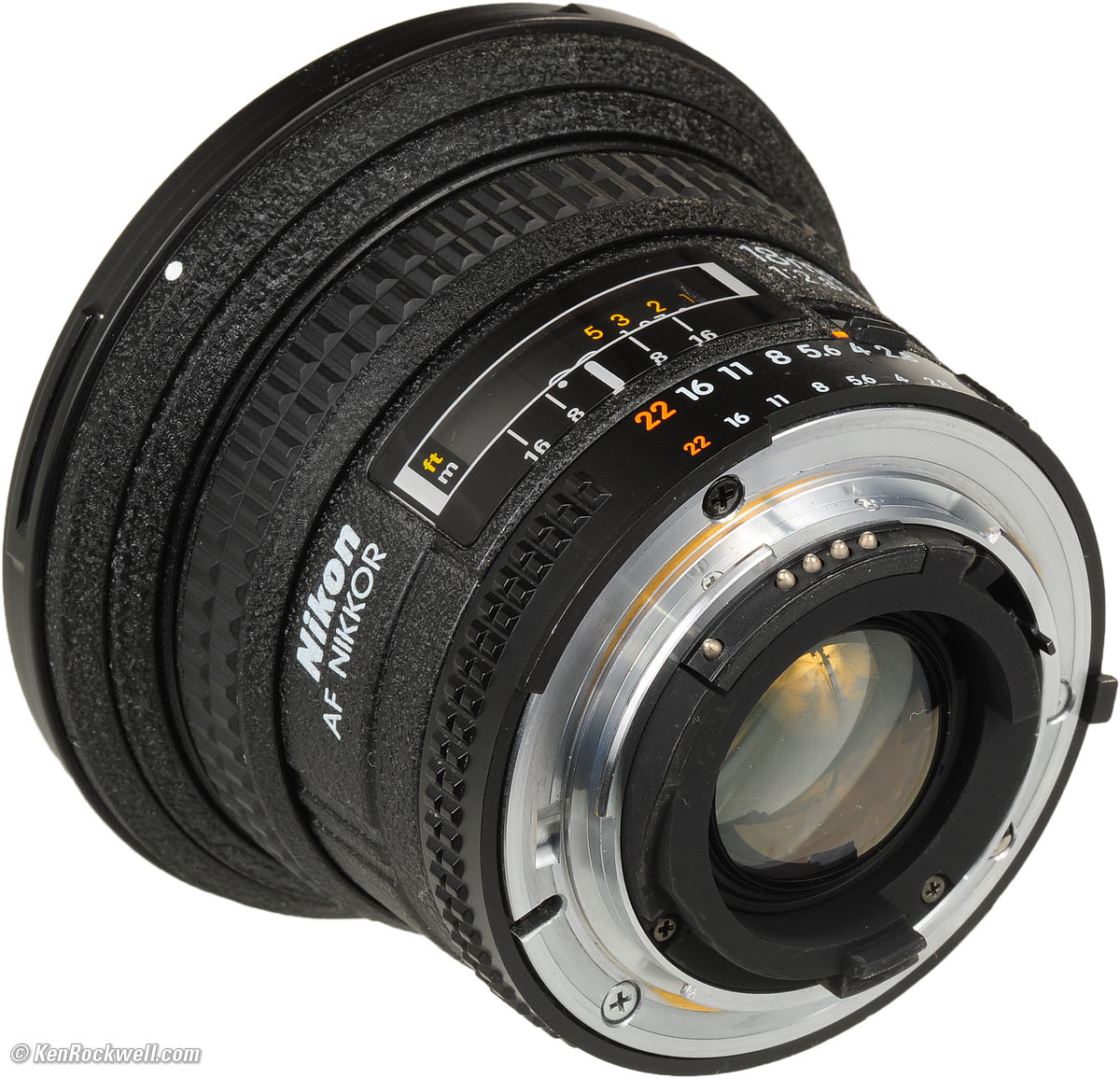
Rear, Nikon 18 2.8. enlarge.
Filter Threads and Hood Bayonet
Black painted aluminum on first version, black anodized on later (s/n starting with 4). The bayonet seems precision cast on earlier models and machined on latter models, unless the paint is hiding the machining marks on the earlier models. I could be wrong and they all may be one way or another, but I do know they are all metal.
Focus Ring
Rubber-covered metal.
Barrel
Plastic and metal, black crinkle-coat paint.
Aperture Ring
Plastic.
Markings
Paint.
Switches
One sliding plastic aperture ring lock.
Mount
Dull chromed brass.
Internals
I see metal.
Noises when shaken
One klunk on early version (s/n starting in 2) and maybe one slight click on latter version (s/n starting in 4).
Serial Number
Burnt into bottom rear of plastic aperture ring.
Made in
Japan.
Sharpness
It is a bit sharper than the 20/2.8 AF wide open, but never gets perfectly sharp in the corners at any aperture.
The only SLR lens significantly better than all these is Nikon's newest 16-35mm and 14-24mm. The 14-24mm weighs three times as much and can't use filters for creative effects or for protection.
If you really need a sharp 18mm lens, also consider the the LEICA 18mm or Zeiss 18mm for LEICA M rangefinder cameras.
Image Stabilization (VR) performance top
This lens has no internal optical stabilization, however it works with internal sensor-shift Image Stabilization (IS or VR (Vibration Reduction)) in some of Nikon's mirrorless Z cameras with the FTZ adapter.
"Percent Perfectly Sharp Shots" are the percentage of frames with 100% perfect tripod-equivalent sharpness I get when I'm shooting hand-held while free-standing with no support or bracing. This is a very strict test; in actual shooting at typical print sizes I get acceptable sharpness at much slower speeds, but for the purposes of seeing how much improvement an IS system gives, this is the most precise method.
Hand tremor is a random occurrence, so at marginal speeds some frames will be perfectly sharp while others will be in various stages of blur — all at the same shutter speed. This rates what percentage of shots are perfectly sharp, not how sharp are all the frames:
| % Perfectly Sharp Shots on Z9 on FTZ (center of image) | 2s |
1 |
1/2 |
1/4 |
1/8 |
1/15 |
1/30 |
1/60 |
1/125 |
| Stabilization ON | 0 |
50 |
100 |
100 |
100 |
100 |
100 |
100 |
100 |
| Stabilization OFF | 0 |
0 |
0 |
17 |
0 |
33 |
33 |
100 |
100 |
I see about a five stop real-world improvement.
Recommendations top
Sample Images Intro Specifications
I use this lens along with my 28-300mm rather than carry my much bigger 16-35mm VR. I prefer it to my 20/1.8 because it's wider; if I'm getting 28mm with my 28-300, I want something wider than 20mm if I'm carrying another lens.
Get one of these if toughness and light weight are important. I'm all about light weight, thus this lens is a favorite. It's the toughest autofocus ultrawide fixed lens ever made by Nikon.
If you want similar optical performance for less money, try the 20mm f/2.8 AF. The 20/2.8 has better ghost performance and the same sharpness and distortion performance as this far more expensive 18/2.8D AF. I still prefer this tougher 18mm for its wider view and standard 77mm filter size.
If you want to spend more money and get better performance, get the 17-35mm f/2.8D AF-S (almost as tough mechanically and better optically) or the 16-35mm VR (big and plastic, but much better optically).
If you've found the time, effort and expense I endure to share all this information for free, this free website's biggest source of support is when you use these links, and especially these links directly to it at eBay (see How to Win at eBay) and to it at Amazon, when you get anything, regardless of the country in which you live.
Thanks!
Ken.
More Information
Here's the link to where Adorama used to sell it new.
© Ken Rockwell. All rights reserved. Tous droits réservés. Alle Rechte vorbehalten.
Help Me Help You
I support my growing family through this website, as crazy as it might seem.
The biggest help is when you use any of these links when you get anything. It costs you nothing, and is this site's, and thus my family's, biggest source of support. These places always have the best prices and service, which is why I've used them since before this website existed. I recommend them all personally.
If you find this page as helpful as a book you might have had to buy or a workshop you may have had to take, feel free to help me continue helping everyone.
If you've gotten your gear through one of my links or helped otherwise, you're family. It's great people like you who allow me to keep adding to this site full-time. Thanks!
If you haven't helped yet, please do, and consider helping me with a gift of $5.00.
As this page is copyrighted and formally registered, it is unlawful to make copies, especially in the form of printouts for personal use. If you wish to make a printout for personal use, you are granted one-time permission only if you PayPal me $5.00 per printout or part thereof. Thank you!
Thanks for reading!
Ken Rockwell.