|
99.9% of all photo books are either coffee-table books loaded with pretty pictures, or technical books about cameras and computer programs that have nothing to do with actually making a good picture. Taking good pictures is all about what's in the picture, and not about what camera you used.
When my friend Marc Silber said he was writing one of the very few books that will explain exactly how to make a good photograph, I was skeptical, but lo and behold, he's written the best book I've ever read about what makes a great picture. It's the best $16 you'll ever spend on photography.
I've reads tons of books, both classic painter's textbooks and modern art books about composition, and none goes into the detail Marc does. Marc says it clearly and to-the-point. Most of the other books I've read on composition have little to say, and spread what little they have over too many pages. Marc says more in fewer pages than anyone ever has.
It's all about the picture in this book; Marc doesn't even bother talking about cameras — although he does point out which of his photos were taken on an iPhone versus regular cameras. This book is printed in the USA; it's not trash offshored to the cheapest possible printer.
|
|
If you haven't already, check out my friend Dave Wyman's book Fearless Photographer: Nature. It's a great book by an actual photographer who's been shooting every day for almost 70 years — and still has no problem riding his bike 100 miles in a day. Dave has learned a lot with all this shooting and with many decades of leading photo tours, and writes well and shows much more practical information in a format we can use compared to a common photo book.
It's loaded with photos and useful information — it's not the usual throw-away book just loaded with computer screen shots. It applies from beginner to advanced, and applies to digital and film.
|
|
A NEW CLASSIC: Light, Gesture and Color.
A new classic is born! This is a fantastic book in which Jay Maisel, one of the world's very greatest photographers of all time, finally writes down everything he's learned in over 60 years of professional photography and the fine-art world.
As a native New Yorker, Jay doesn't beat around the bush. Jay's book gets to the point. Unlike Bruce Barnbaum's superb Art of Photography which is a very long and difficult read, I finished Jay's book in one evening. I bought The Art of Photography a few years ago, and I'm still not finished, while with Jay's book, I'm done and can get back to shooting.
Jay stresses that photography is all about relaxing and finding the picture, not futzing with camera settings or Photoshop.
Light, Gesture and Color is a mandatory read for everyone interested in photography. Jay finally writes down all the secrets I've been trying to write down myself.
Better and faster than any other book, Light, Gesture and Color teaches us how to go out and find the picture, which is the most important thing in photography. It says nothing about technique, which is the easy part covered in the next book, Creative
Nature & Outdoor Photography:
|
|
CLASSIC: Creative Nature & Outdoor Photography.
Creative
Nature & Outdoor Photography has always been my favorite single book for most people who want to learn the technique behinde taking better pictures. It is profusely illustrated and is a much more casual read than The
Art of Photography. If you're willing to spend hundreds of dollars on a new camera or lens, you owe it to yourself to get a copy of each of these three classics above and below here.
What makes both editions of this Brenda Tharpe book stand out so far from every other book about how to take pictures is that they are the only books I've read that cover everything you need to know, like seeing light, shadow, balance, composition, color, interpretation, texture, and everything that matters in just one book, and wastes no space on the things that only get in the way.
The first edition covered the same things, but covered them from a film perspective. I suggest the first edition for those of you upgrading to film since it explains subtleties like when to use an 81C versus 81B filter and film types. The new edition is all you need for shooting digital.
|
|
CLASSIC: The Art of Photography.
The
Art of Photography is the best book I've read in over 40 years of reading about photography.
Bruce Barnbaum goes further and deeper into explaining the intangibles that make a great photograph than anyone else ever has.
If you want to learn how to create powerful photographs instead of just snapping away and hoping something turns out later in your computer, this is the one book that you must read.
I try to explain what makes a great photograph on this website, while Bruce Barnbaum goes far deeper and into far more levels on the critical topics that define a magnificent photograph.
The
Art of Photography does more to explain composition and seeing than all of the other books I've tried to suggest below, combined.
This book is for people with visual imagination. If you're a scientist or engineer looking for some fast 1-dimensional formulae that will let you pop out great photos without having to stop and think long and hard about your subject and your message, you won't understand this book. This isn't a book about rules and exposure. It's a brilliant book that finally explains everything that goes into making a serious photograph — and why rules are "...mindless things that raise you quickly to a level of acceptable mediocrity, then prevent you from progressing further."
If you are willing to expend the mental effort required to create great photographs, this is the book that explains what matters and about what you need to be thinking to create extraordinary images.
I've been shooting and learning for many decades. This is the first book which lays it all out clearly and completely. If at first you don't understand this book, keep reading it until you do, because The
Art of Photography is the book that says what needs to be understood in order to create meaningful, deliberate, interesting photographs.
I'm astounded at how Bruce Barnbaum is able to write about all photographic and artistic styles in this book, not just his own. I find this book helpful to everyone, not just people interested in Bruce Barnbaum's particular style, which is fine photography. He later gets into even more technical detail about his own techniques, however it's his first hundred pages about enthusiasm, communication, composition, visualization, light and color that alone make this large duotone masterpiece a bargain, even at three times the price.
The
Art of Photography is a very serious book for people deeply interested in creating exciting photographs. It's not the best book for your coffee table or for people only casually interested in pretty pictures. It is the best book for people willing to invest the time and effort demanded to create brilliant photographs.
Like all these books, it also comes from Amazon.
DEAL: Use super-secret code "kenrockwell" on checkout if you get the eBook from the Rocky Nook site linked above for a 35% discount. If you use the Amazon links, different discounts are already there.
|
|
NEW: The Essence of Photography.
An all-new book from Bruce Barnbaum, author of the superb Art of Photography.
|
|
Fast Track to Photoshop CS e-Book.
Bruce Percy has an e-book that finally shows clearly how to do all the difficult image tweaks that are critical in making good images great. He shows step-by-step how to use adjustment layers and masks for localized image adjustments, which are the most important things you can do to your images in a computer.
More precisely, Bruce finally explains, for the first time I've ever seen it written down, how to do burning and dodging properly in Photoshop. This is the most important image correction you can do in a computer, and it's critical for people and landscape and every kind of shot, and I have yet to see it in a book.
Creative use of adjustment layers and masks is the most important part of Photoshop, and something few hobbyists ever learn.
I use this process all the time for lightening faces and darkening corners and backgrounds to make my subjects pop!
Bruce goes into a whole lot more, too, and it's all easy to understand.
If you use a computer to process your images and don't yet know how to use layers and masks, you need this e-Book. (sorry, this one's not free.)
This is so important I've wanted to write this up since the 1990s, but it's also so difficult to explain well that I've never been able to write it this clearly — so I haven't written it. Now Brice has; get it.
|
|
Photo Inspiration: Secrets Behind Stunning Images is a book with about a hundred different great pictures by about a hundred different photographers, each with an explanation from the photographer about how he created the image.
This book is exactly what so many of you have wanted: a modern book with explanations of how each shot was made.
As an added bonus for folks who get the book, go to pixu.com/offer for 6 months of a free online portfolio service which gives you an online location where the world can see and buy your own images. It usually costs $99 a year. (After one month you'll be asked for a secret code found in the book to weed out freeloaders who don't actually have the book.)
|
|
The Art of Adventure: 40 Photographic Examples by one of the world's foremost photographic artists, Bruce Percy, describes the thought processes behind the making of 40 photographs.
It's a limited-edition book that only comes directly from the artist.
I've got one, and it's beautiful. For those of you who want to learn more about the seeing process of the photographic artist, the descriptions are very helpful.
It's loaded with both nature and people photos.
It's just over a foot square, and you can preview it online. For those of you outside the UK, note that the price is in pounds sterling (about $1.55 to the pound). Enjoy!
|
|
Chasing the Light by Ibarionex Perello is also one of the very, very few books that talks about what actually matters in making great photos, instead of just being another book filled with computer screen shots.
Chasing the Light is filled with great photos, and not a single computer screen-grab. Much more importantly, it talks about the broad issues critical to creating great photos, and stresses that your camera just doesn't matter.
|
|
Galen Rowell's Inner Game of Outdoor Photography is an eye-openingly clear book that explains many of the reasons most people don't get the photos they want, and what to do about it. Galen says more in a few pages than most photo books say, period.
The original hardcover edition, which used to sell for about $23, sold out and then people were scalping them for up to $1,000. Wait, and the new soft cover edition should be available in May 2010 at under $20. The paperback has a different cover, but the same page count and size.
|
 |
The Best Camera is the one that's with you, say most great photographers, and especially Chase Jarvis, who created all the brilliant photographs in this art book on his iPhone.
If you're like many beginner who think it takes a good camera to make a good picture, just flipping through this book should show you that it's never about the camera.
|
|
Ansel
Adams: The Camera Most everything you need to
know about cameras from the master himself. He covers not only
4x5, but also medium format and even 35mm.
These
Ansel Adams books have been the primary references from which most other
technical photo books and magazines derive for decades. The Master loved
to teach, and in these books Ansel reveals how he did what he did. You
need to read these. They are a slow read because Ansel packs every paragraph
with more useful information than entire chapters of lesser books.
|
|
Ansel
Adams: The Negative Here's how I learned the Zone
System and everything I ever need to know about exposure.
Ansel even explains the system for use with color and point-and-shoot
cameras! It may be a bit advanced, and is also the clearest
explanation there is. Read carefully. You need to know this.
|
|
Ansel
Adams: The Print Most of the skill for which we appreciate
Ansel was in his printing. Here he explains everything he did to
make them. He also explains everything from setting up a darkroom
to mounting the finished prints.
|
|
Ansel
Adams: An Autobiography Little, Brown & Co.
1985: This is great! Ansel spills everything about how to do
commercial photography for a living and how to make expressive
images. You need to read this if you think it's easy being a
photographer. Ansel explains how he had to slave away doing commercial
photography full time from 1930 through the 1970s just to make
ends meet . He had to get fellowships (grants) to afford to get
away to make the photos we all love today.
He
slaved away for AT&T, PG&E, Life, and Fortune. He's pretty
clear about his complaints with this sort of work. He shot for
money since he was a teenager, starting in 1920 shooting class
photos. He ran ads in 1940 offering to make photos and offer private
instruction. He faked it all with the best of them, photographing
altered loaves of bread, cement plants, clothes and turkeys for
money.
The
book is loaded with experience about getting in business and getting
into art. How did he ever sell any art at all? He had a friend in
the art world introduce him to existing art buyers who insisted they
buy Ansel's work.
He
also explains how to make an expressive work of art as opposed to
a simple snapshot when talking about his Monolith image. Actually
he talks a lot about art, what it means, and how to create it. This
is a magnificent book. Ansel is quite clear: he considers himself
an artist who uses technology to express himself. He was not a photographer
or a technician.
He
stresses importance of getting written contracts, and even with them
he was cheated.
This
great book coincidentally is the same size (but weighs more) than
my 12" iBook laptop computer.
|
|
Mountain Light. Galen Rowell is and was the world's foremost alpine photographer. This book is a classic. It's loaded with fantastic photos, which alone inspire many to making great photographs, and also is loaded with Galen's explanations of how and why he sees and how he gets to thee places.
|
|
Within the Frame: The Journey of Photographic Vision is David duChemin's book written for travel and people photographers, and is one of the best books I've read about how to see and make great photos.
It's written from a humanitarian photojournalist perspective, and its wisdom applies to every sort of photography of people and places.
|
|
Understanding
Exposure Bryan Peterson profusely illustrates not
just exposure, but many other critical components of photography.
Personally so many people have found this a great book that I just
ordered one myself from Amazon and will let you know more when
I finish it.
|
|
Designing
a Photograph by Bill Smith. It starts
off with examples to illustrate points by which to analyze photographs.
It then gets to the good stuff about how to create
great photos out of nothing. It offers exercises
and assignments to get your creative juices flowing, and finishes
with specific suggestions for every sort of photography.
|
| |
Photographic
Composition by Grill and
Scanlon. One of the very few books that explains the most important
aspect of photography: composition.
|
|
John
Shaw's Nature Photography Field Guide Loaded with
current information about nature photography.
|
|
Using
the View Camera by Steve Simmons very clearly explains everything you need
to get started in large-format photography. If
you want to learn everything you need to know about 4 x 5 photography,
get this one book.
|
|
Large
Format Nature Photography Jack Dykinga is one of my
favorite photographers. Jack is one of the few guys who really
gets out in the middle of nowhere and brings back striking images.
Jack is responsible for waking many people up to the sandstone
formations of the American Southwest.
|
| |
The
New Nikon Compendium is my favorite guide to
the Nikon system. The
first edition Nikon Compendium from 1993 and the slightly older second
edition from 2003 here published
by Hove are also good.
These compendia are
loaded with refreshingly correct information as to what was made
when and what features work on which cameras, answering exactly the
sort of emails I get from people all the time. They also cover
all the cameras, motors, finders, lenses, flashes and other accessories.
The newest edition covers digital cameras and historic rangefinders.
It's not cheap and it's worth every penny since you won't have to
buy all the other Nikon guides out there.
Nikon guides
are like light meters: are are all useful, but no two agree 100%.
Even Nikon's own printed catalogs can disagree with themselves. For
instance, Vol. 6 of the Nikon USA full line product guide shows a photo
of the 300/2.8 AF-S next to the listing for the 300/4 AF, and the AF-S
80-200 is shown for the 80-200 non-AFS. These goofs are common, which
is why you shouldn't spend much time reading guides and why I started
making my own observations and writing them down. That's how this website
came to be: personal notes about my own gear so I wouldn't forget.
The original Nikon
Compendium was at least as good.
Of all the other Nikon guides, Moose
Peterson's are my favorites. Unfortunately for gearheads he's
gotten out of the guide business and fortunately for photographers
he stresses photography itself. Unlike most guide
writers who are authors first and photo hobbyists second, Moose is
a real photographer. His guides are written from a seasoned point
of view.
|
|
123di
- The 123 of digital imaging Interactive Learning Suite. If you like the
technical part of this site, you'll LOVE this electronic education program
here! This
author is a genius and has already explained all the technical aspects
of digital photography that I've only dreamed about writing. The book
is also packed with practical tips and editing tutorials.
|
| |
On
Being a Photographer by David Hurn. This book also is
unusual in that it addresses what is actually important in photography
as opposed to pointless technique.
|
|
Drawing
on the Right Side of the Brain by
Betty Edwards. This may help you to see better, which is the most
important part of photography. Yes, it's aimed at artists who
draw as opposed to photograph, and yes, the concepts of seeing
are identical. You can see previews at the link.
|
|
Lenswork is an exquisitely-printed magazine loaded with extraordinary black-and-white photographic artwork.
|
|
View
Camera Magazine I
subscribe to this. This is the best, and possibly only, magazine
covering large format photography. Each issue is loaded with
a couple of artists' portfolios as well as news, and even very
useful technical articles. It's edited by the author of the
book "Using the View Camera" above. Amazon keeps
moving it around so you'll probably have to search for it.
|
|
Macworld I
also subscribe to this. I find that every issue has some Photoshop
or other tip I find genuinely useful so I bite the bullet on price.
Amazon keeps moving it around so you'll probably have to search for
it.
|
|
How
to See: A Guide to Reading Our Manmade Environment
and Visual
Adventures in a World God Never Made Both are
out of print by George
Nelson. These links take you to Amazon who has them
used.
|
|
A
Whack on the Side of the Head : How You Can Be More Creative
Exciting photos are made by creative thinkers. Creativity comes from
thinking differently from everyone else and having a lot of fun. I found
this book very helpful to keeping me in my usual playful and creative
mood.
|
|
How
to Think Like Leonardo da Vinci
This book is also helpful just like the one above; it just takes longer
to get to the point. They are both required reading. It explains how Leonardo
had an insatiable curiosity and went out and tried everything for himself
to see what happened. The same applies to photography, photo technique
and equipment evaluation. You need to try everything yourself; not just
rely on the work of others.
|
|
Photographer's Market
has come out every year for decades loaded with thousands of listings
of magazines, ad agencies, stock houses, books, card and calendar publishers,
galleries and zillions of places for you to start selling your photos.
It also lists submission guidelines, names and contacts and payment info.
This is the one book to get if you really want to start selling your photos.
|
|
National
Geographic Photography Field Guide This is the current edition
of the classic. Every edition is good. Pay attention to the important
aspects of subjects and compositions, but don't take the camera
equipment examples as Gospel, since they they focus on the tools
used in journalism.
|
|
Learning
to See Creatively: Design, Color & Composition in Photography
by Bryan Peterson. Exactly what it says; a very helpful book for making
real photos.
|
|
Beyond Portraiture by Bryan Peterson covers just about everything I'd want to know about photographing people. It has a lot of new information about how to walk up to total strangers and get them to pose for you.
|
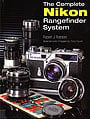 |
The Complete Nikon Rangefinder System by Robert Rotoloni is the authoritative work documenting the 1950s Nikon rangefinder camera system for collectors. This is the largest and most complete compilation of everything Nikon made, excepting the SLR cameras and lenses, from 1932 - 1964. It even includes many never-manufactured prototypes. See my full review of this book.
|
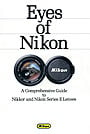 |
Eyes of Nikon is Nikon's own March, 1985 book covering their AI-s manual focus lenses at their peak. The world didn't know, but Nikon was done designing manual focus lenses. It was time to document them forever in this soft-cover art book that came in its own slip-case. Internally, Nikon was busy working on the still secret AF lenses.
Every AI-s lens has it's own page or two of fame. This book has been out of print since 1985, never again repeated in Nikon's 90 year history.
Luckily, like the manual lenses, there are plenty of these books around, so they go for about $10 used. |